
Driving the Icefields Parkway: Mountains, Glaciers & the Ice Explorer
There are scenic drives, and then there is the Icefields Parkway. Winding through the heart of the Canadian Rockies, this legendary road delivers one incredible view after another—towering mountains, turquoise lakes, rushing waterfalls, and massive glaciers. We had been looking forward to this drive since arriving in Banff, but there was one thing we could not control: the weather.
In this post, we share our day-long drive from Banff to the Columbia Icefield, the spectacular stops and scenery along the way, and our final adventure—boarding the Ice Explorer and stepping right onto the glacier.
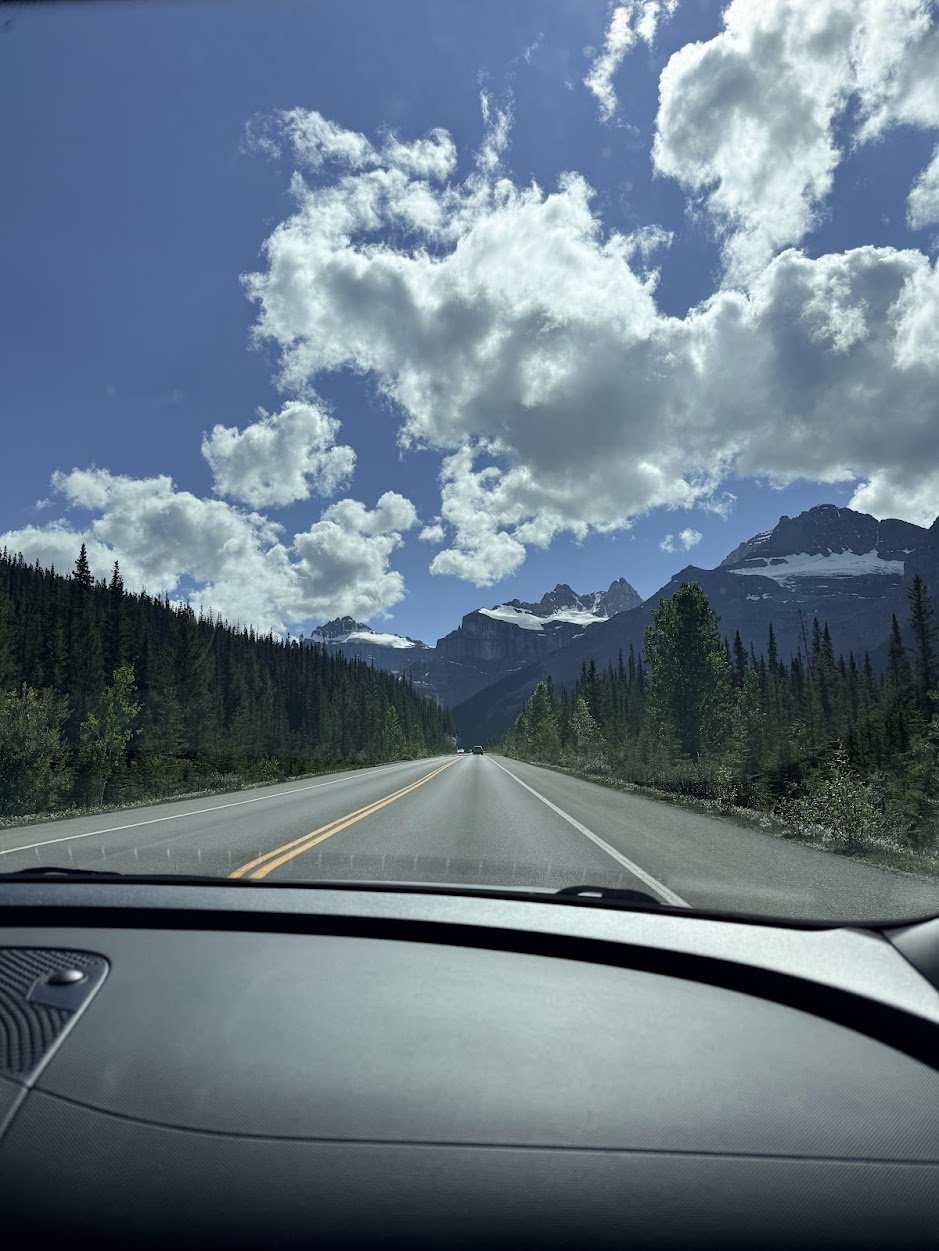
We started our journey from our hotel in Banff, with the previous day’s weather still very much on our minds. Rain, thunder, and lightning had swept through the area, and as we set off that morning, we were not quite sure what we would be able to see on our roughly 115-mile (185-km) drive to the Columbia Icefield vis the Icefields Parkway.
Tip: There are rental car companies right inside of Banff that you can rent for the day or, like us, keep for a couple of days, where we then drove to Calgary.
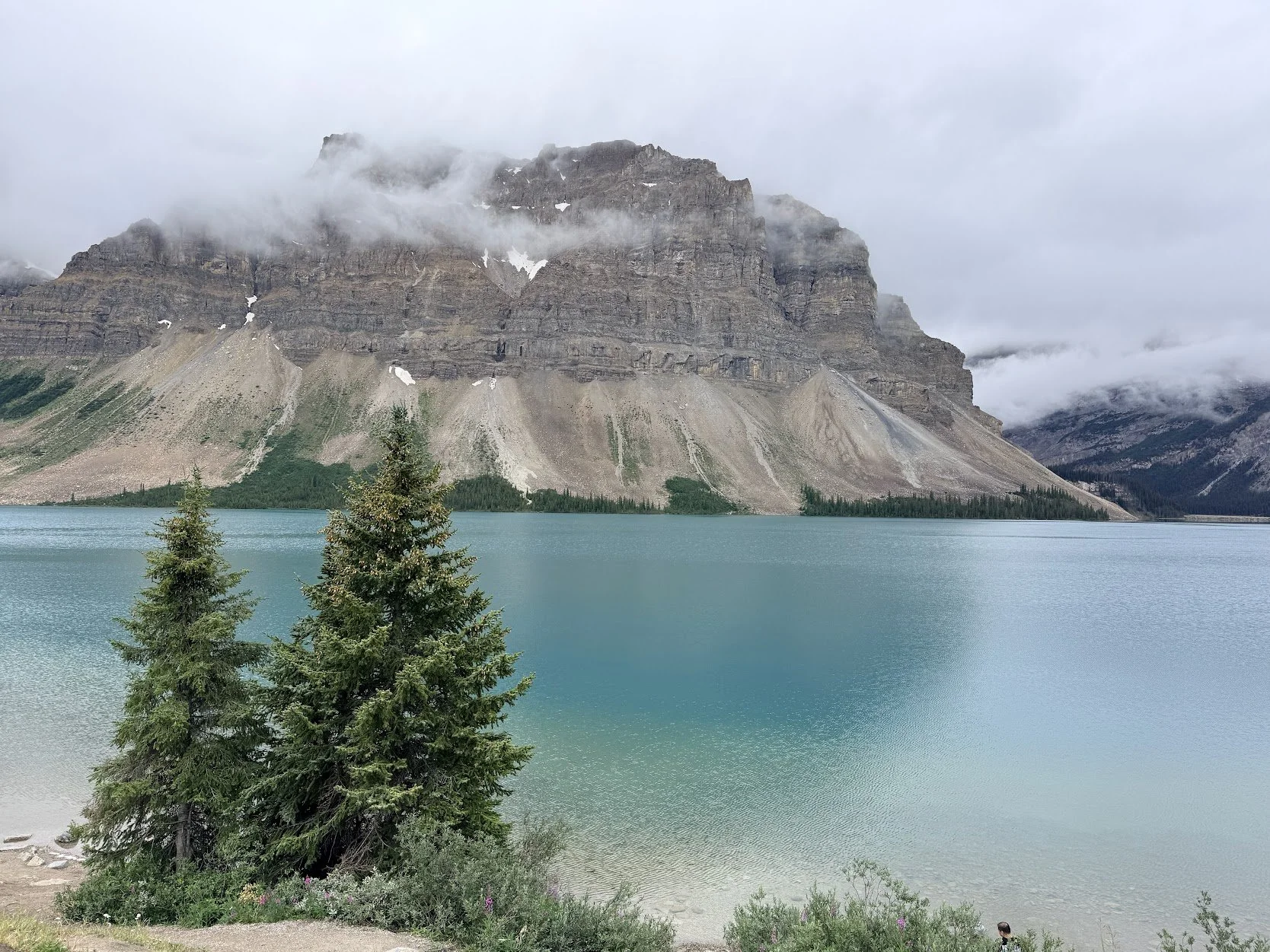
Our first stop along the Icefields Parkway was Bow Lake, about 21 miles (34 km) north of Lake Louise. The clouds were still hanging low over the mountains when we arrived, so this was not quite the mountain panorama we had hoped to see. Still, there was something beautiful about Bow Lake beneath the moody skies—and we were only getting started.
At this point in our drive, though, we were still watching those clouds and wondering just how much of the Canadian Rockies they were going to let us see.
Sun’s Out!
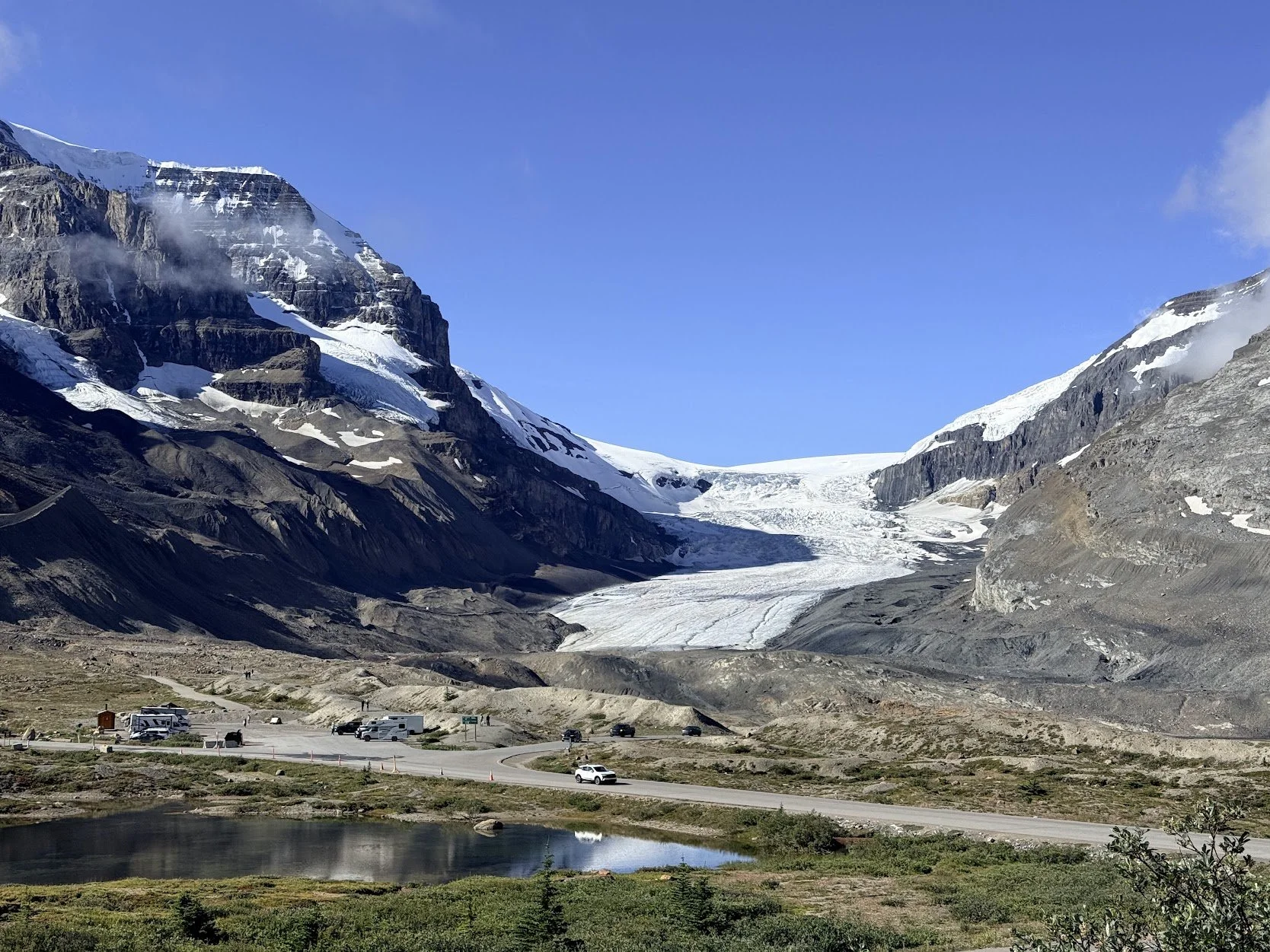
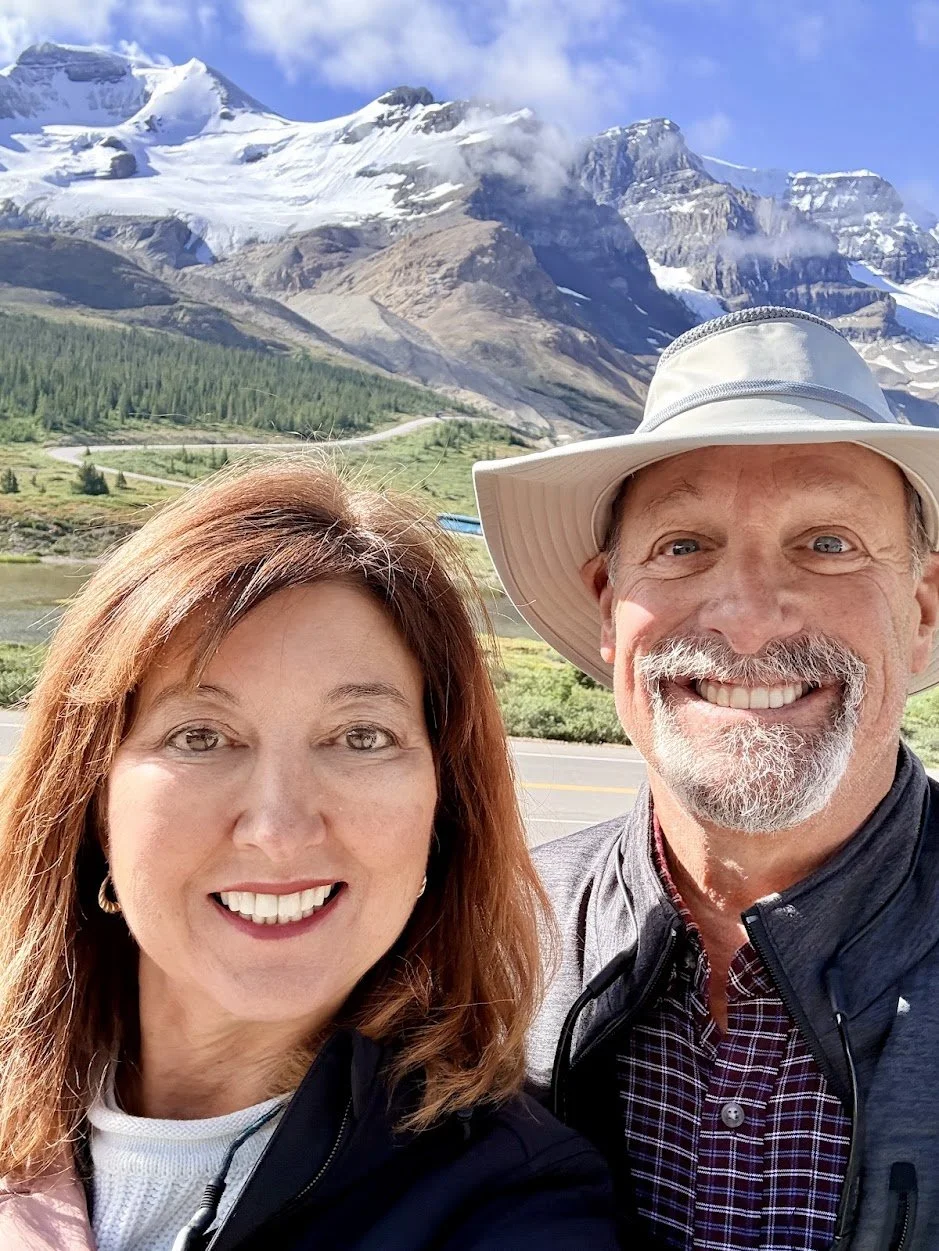
We continued to make our way up the Icefield Parkway, chasing clearer skies. And little by little, the weather began to cooperate. We arrived at our destination and we were so fortunate, the sun met us there!
And the Icefield itself was showing off for us.
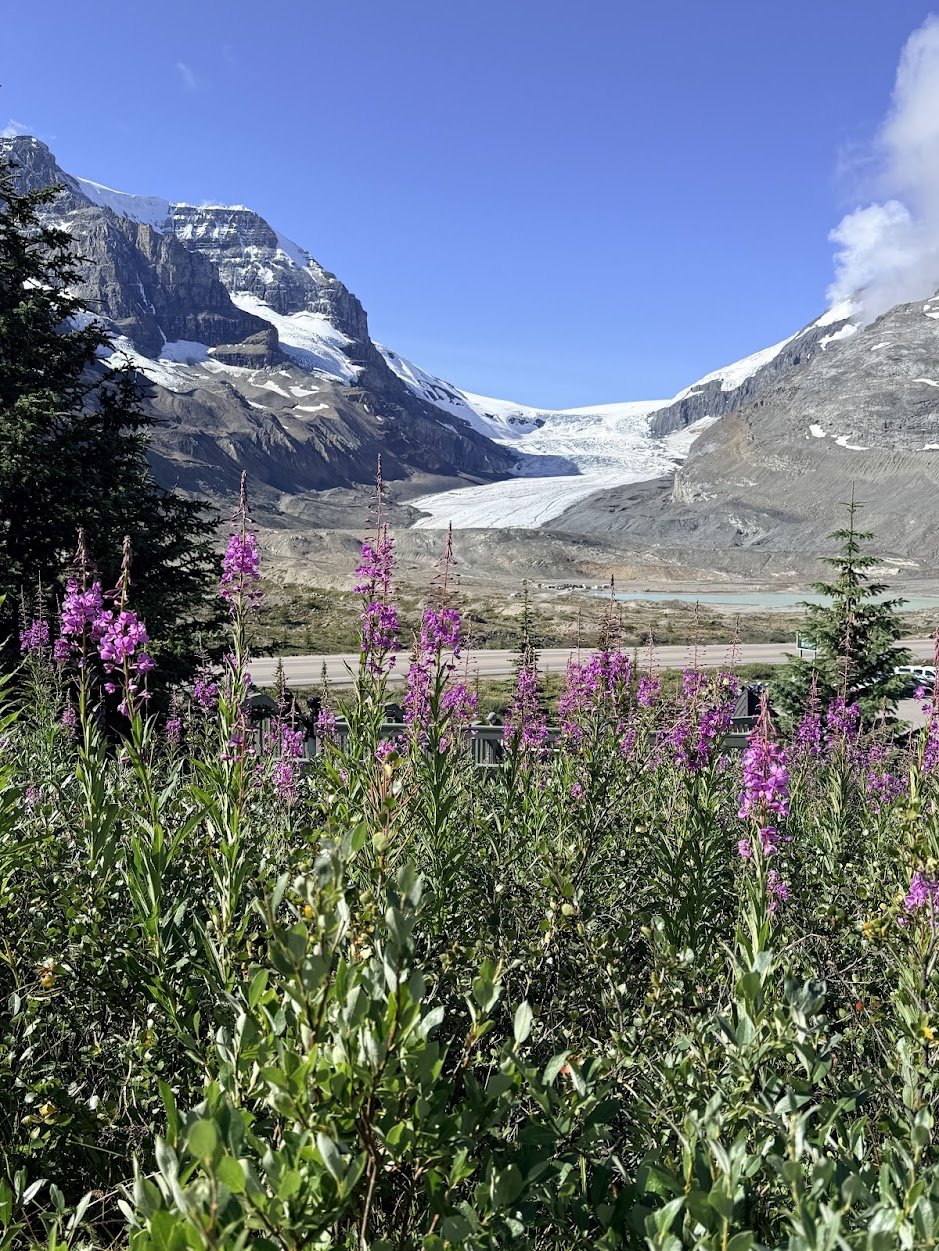
As of summer 2026, you will want to book a timed ticket in advance for the Columbia Icefield Adventure, which takes you aboard one of the massive Ice Explorers and out onto the Athabasca Glacier. Be sure to give yourself plenty of time to get there. Traffic, road construction, wildlife, and all those tempting scenic stops along the Icefields Parkway can easily slow you down.
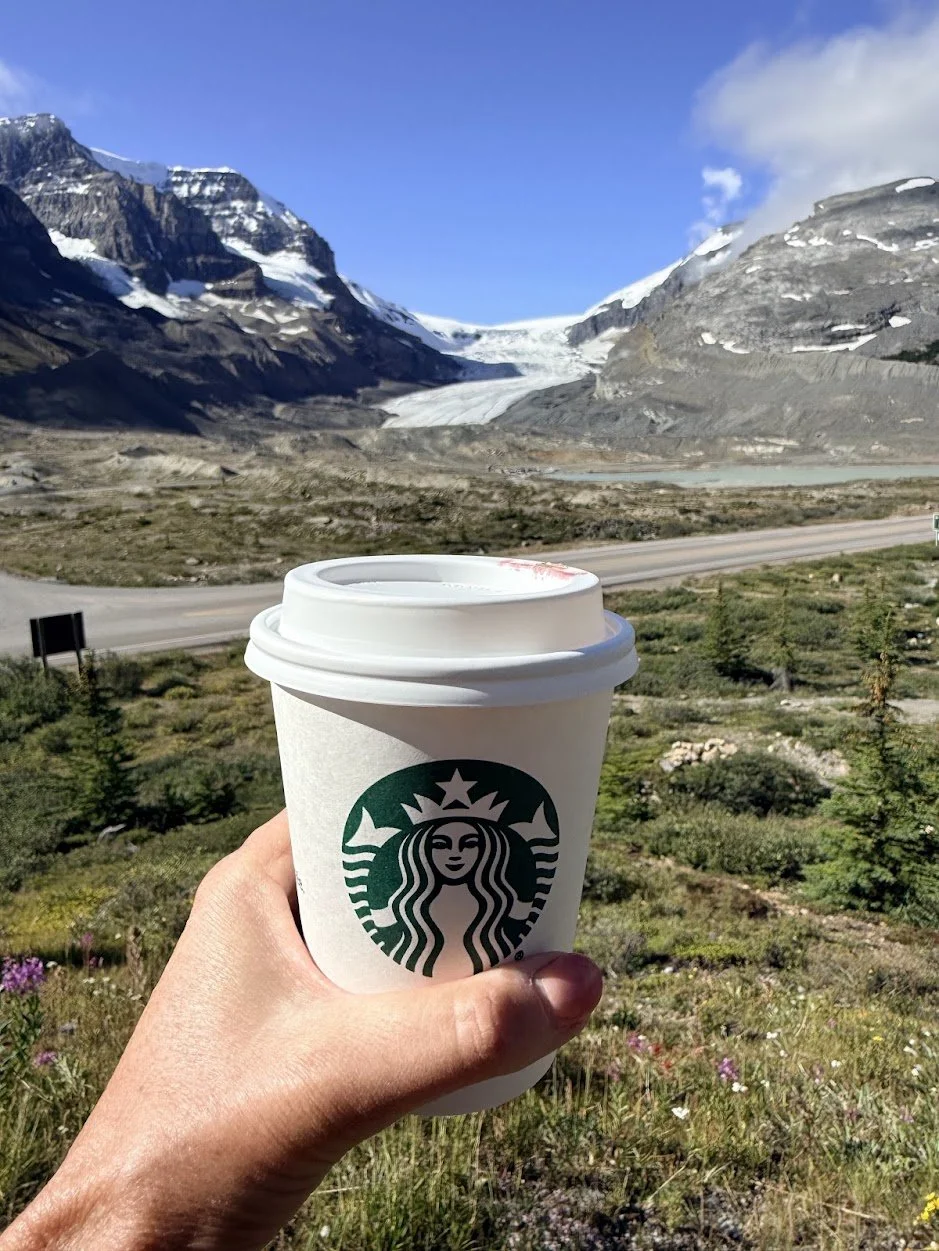
We arrived about an hour early, which turned out to be no problem at all. And what did we find waiting for us at the Glacier Discovery Centre to warm us up before heading onto the ice? A Starbucks at roughly 6,500 feet!
With coffee in hand and the Athabasca Glacier spread out before us, it was a pretty perfect way to enjoy the scenery and wait for our departure time.

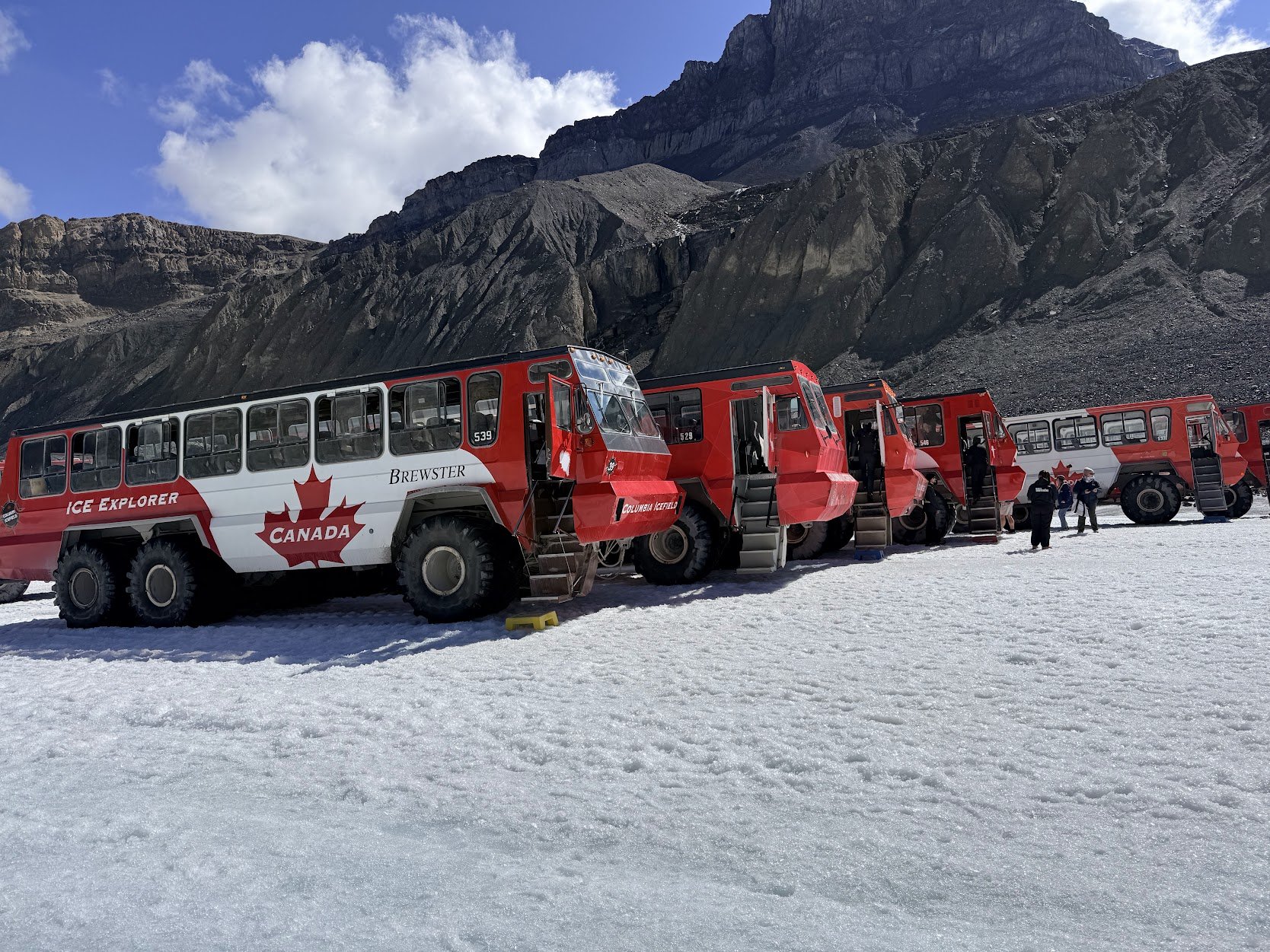
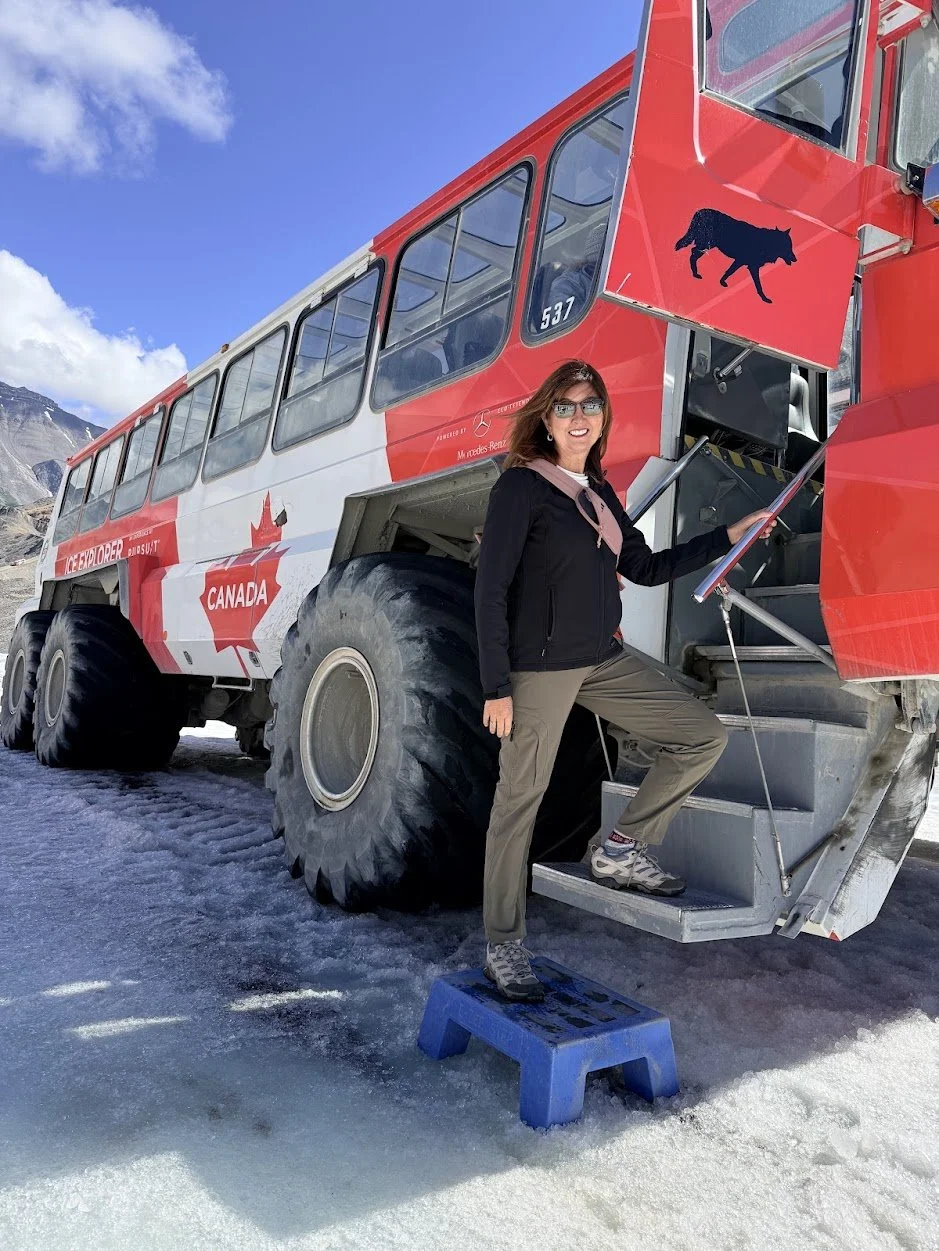
Meet the Ice Explorer—and yes, it is massive! From the Discovery Centre, a bus takes you across the highway toward the glacier, where you transfer to one of these giant vehicles. With so many visitors making the trip each day, it is an impressively well-run operation.
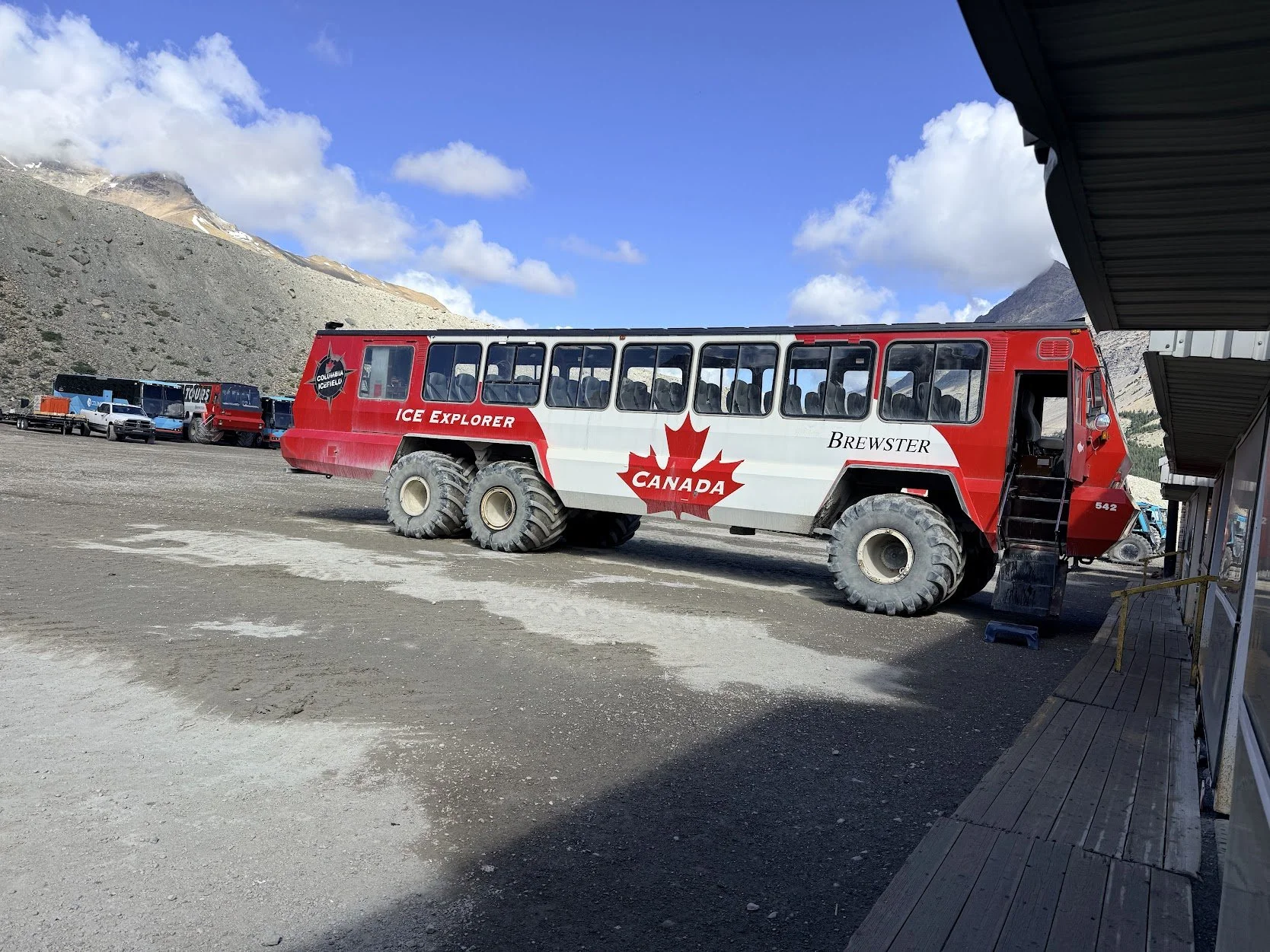
These 27-ton, six-wheel vehicles were specially designed to tackle this rugged terrain and carry visitors right onto the glacier. There are just 22 in the fleet, making the ride itself part of the adventure.
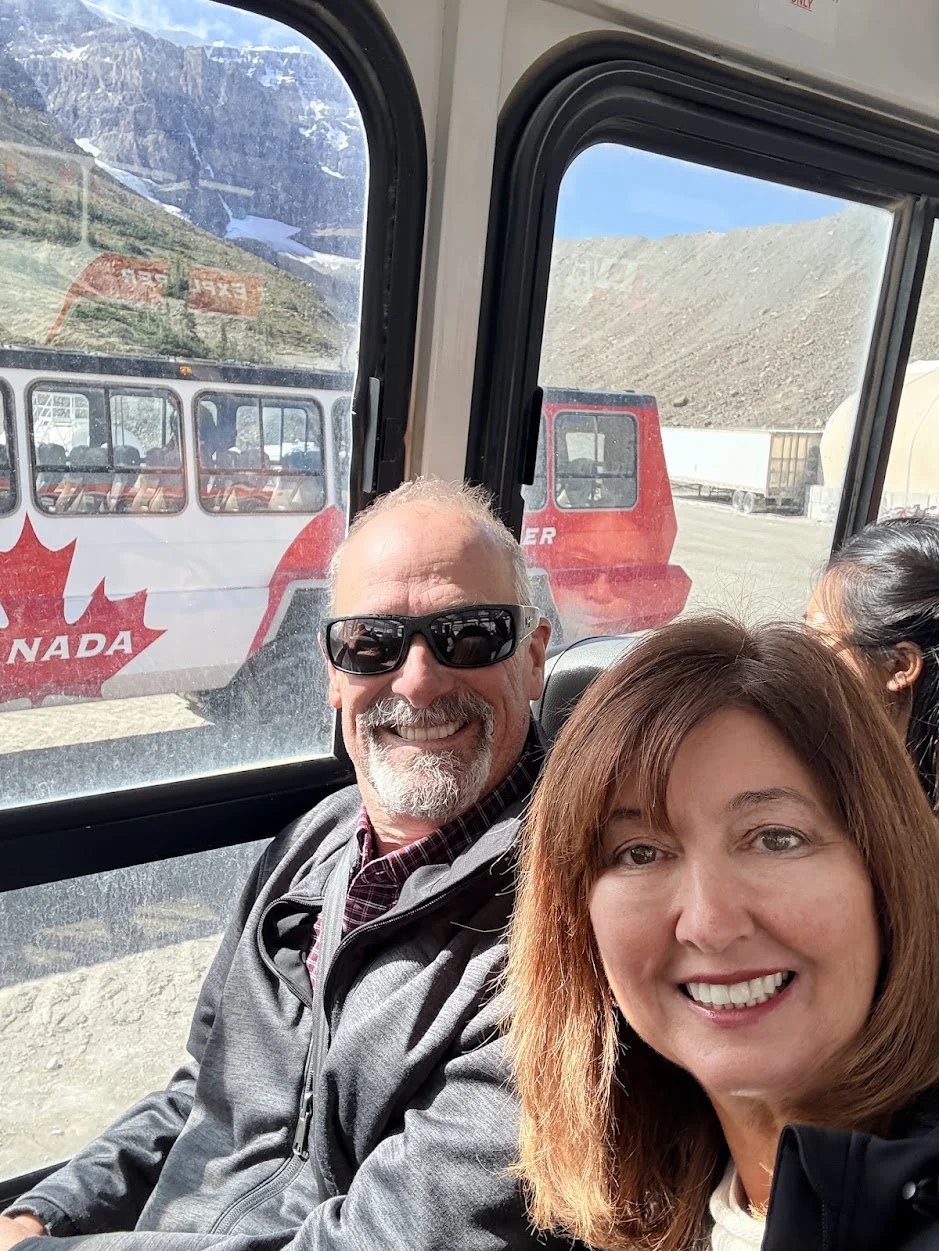
And then we were on the Athabasca Glacier! The Ice Explorers bring you right onto the ice, where you can get out and spend some time walking on the glacier itself.
One of our favorite fun facts: the Athabasca is just one of the glaciers flowing from the massive Columbia Icefield, whose meltwater eventually makes its way toward three different oceans—the Pacific, Atlantic, and Arctic.
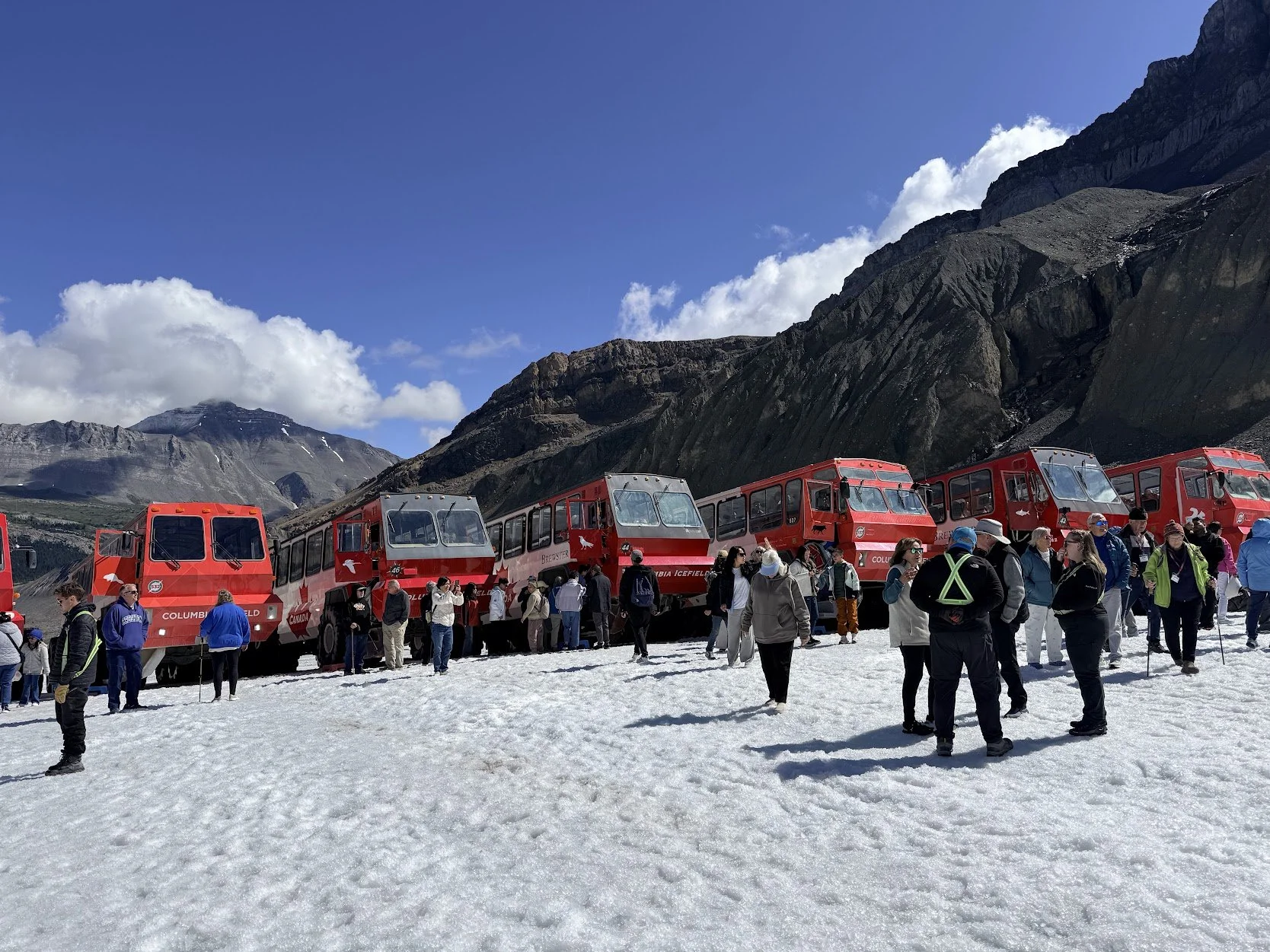
Standing on the Athabasca Glacier really puts its size—and its fragility—into perspective. Our guide shared the glacier has been retreating for more than a century and is currently shrinking by about 16 feet (5 meters) each year. In fact, 2023 recorded more ice melt here than any of the previous 10 years of monitoring.
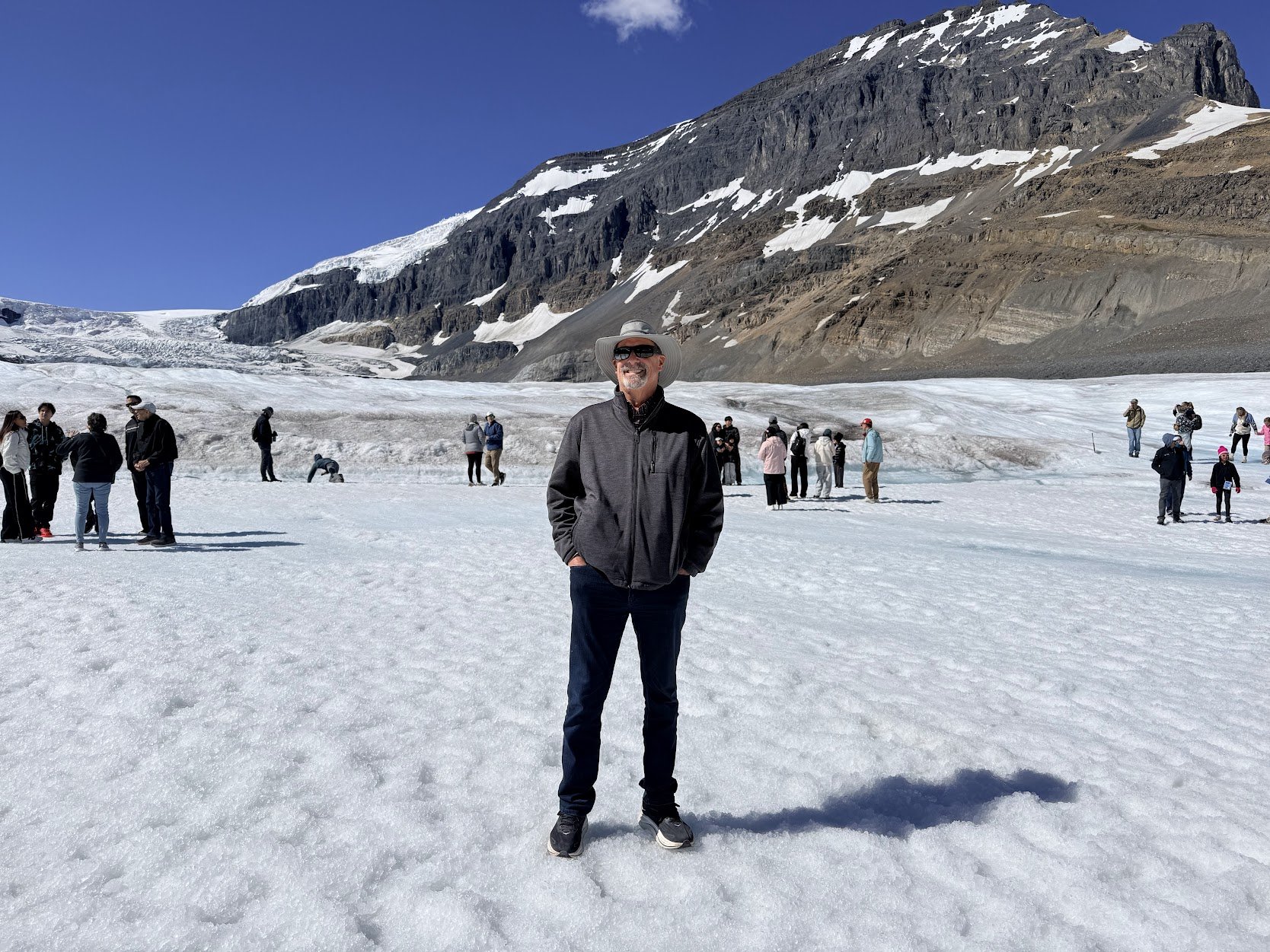
We learned that as impressive as the Athabasca Glacier looks, it is only one small part of the massive Columbia Icefield. Covering about 125 square miles (325 square kilometers), much of the icefield is actually hidden from view behind the surrounding mountains.
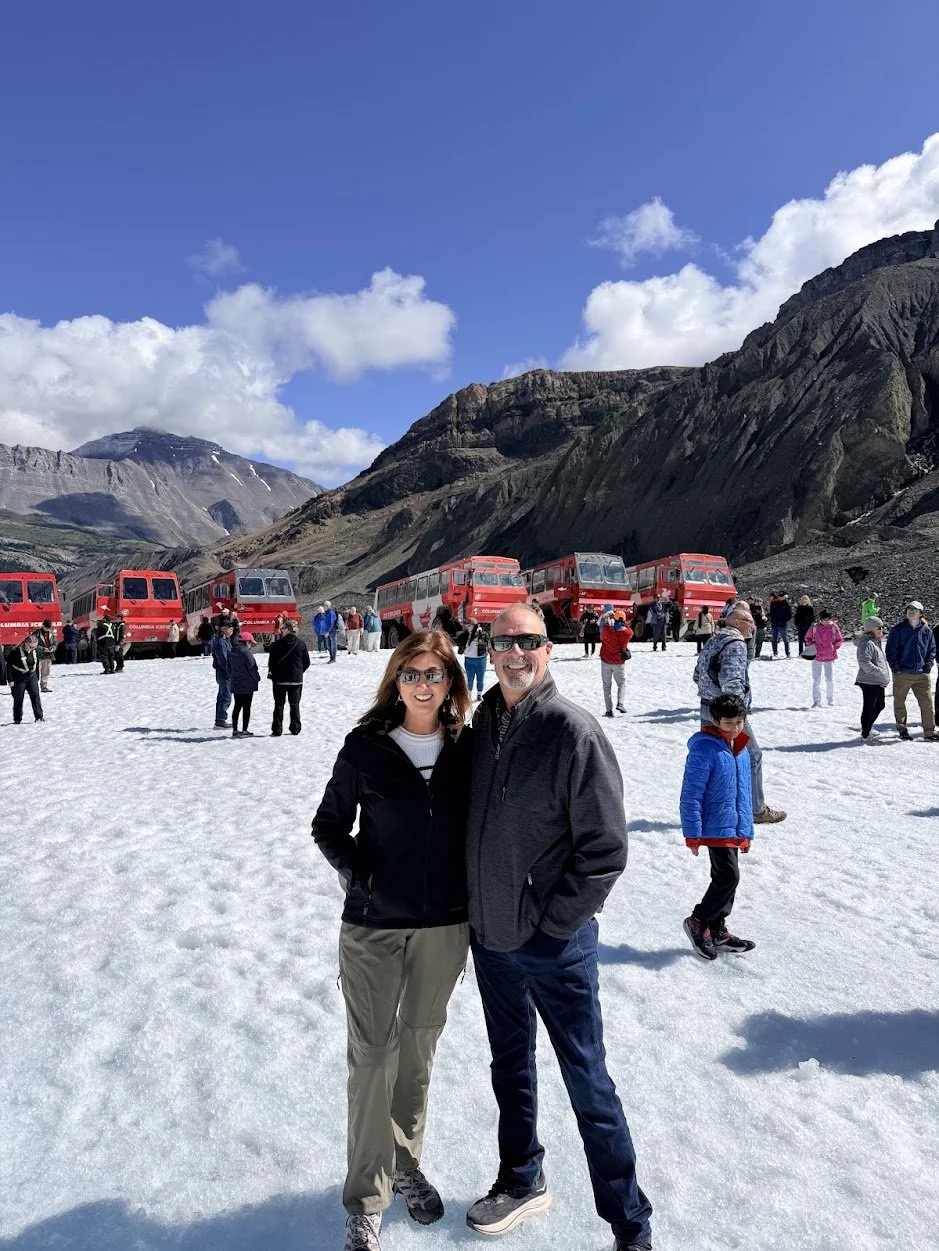
Just seeing all the massive Ice Explorers on top of the ice against the blue sky was so impressive.
Time to Head Out
The tour we selected allowed for about 30 minutes of exploring on top of the glacier. Soon it was time to head back. There are tours that take smaller vehicles that last longer and go further out onto the ice. For us, this was the perfect amount of time
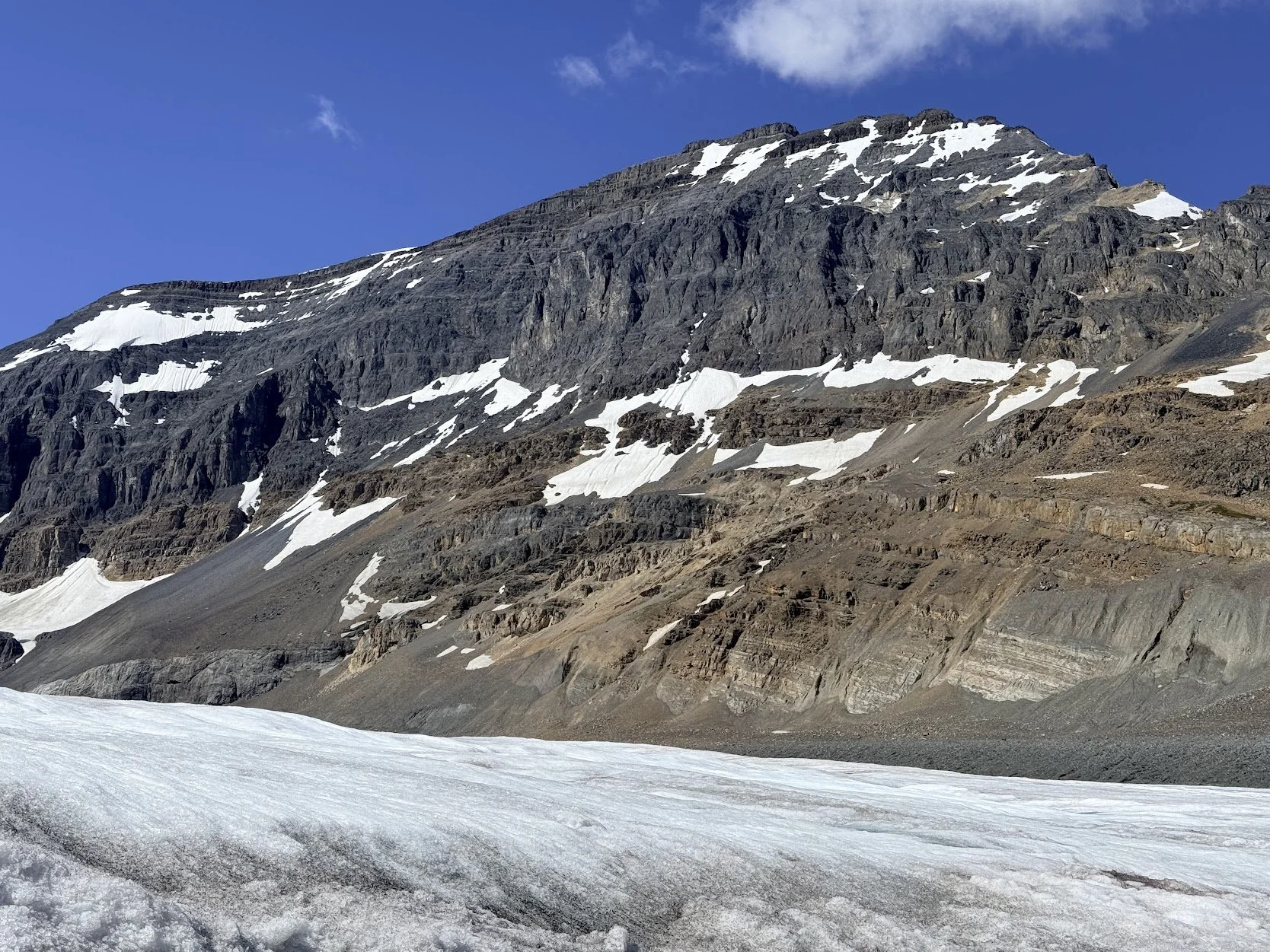
As we headed down we looked up at Mount Andromeda from the Athabasca Glacier. Our guide shared Mount Andromeda rises to 3,450 meters (11,319 feet) and sits along the Continental Divide, right beside the Columbia Icefield.
We were done with the Athabasca Glacier but not the adventure.
Our next stop was this!
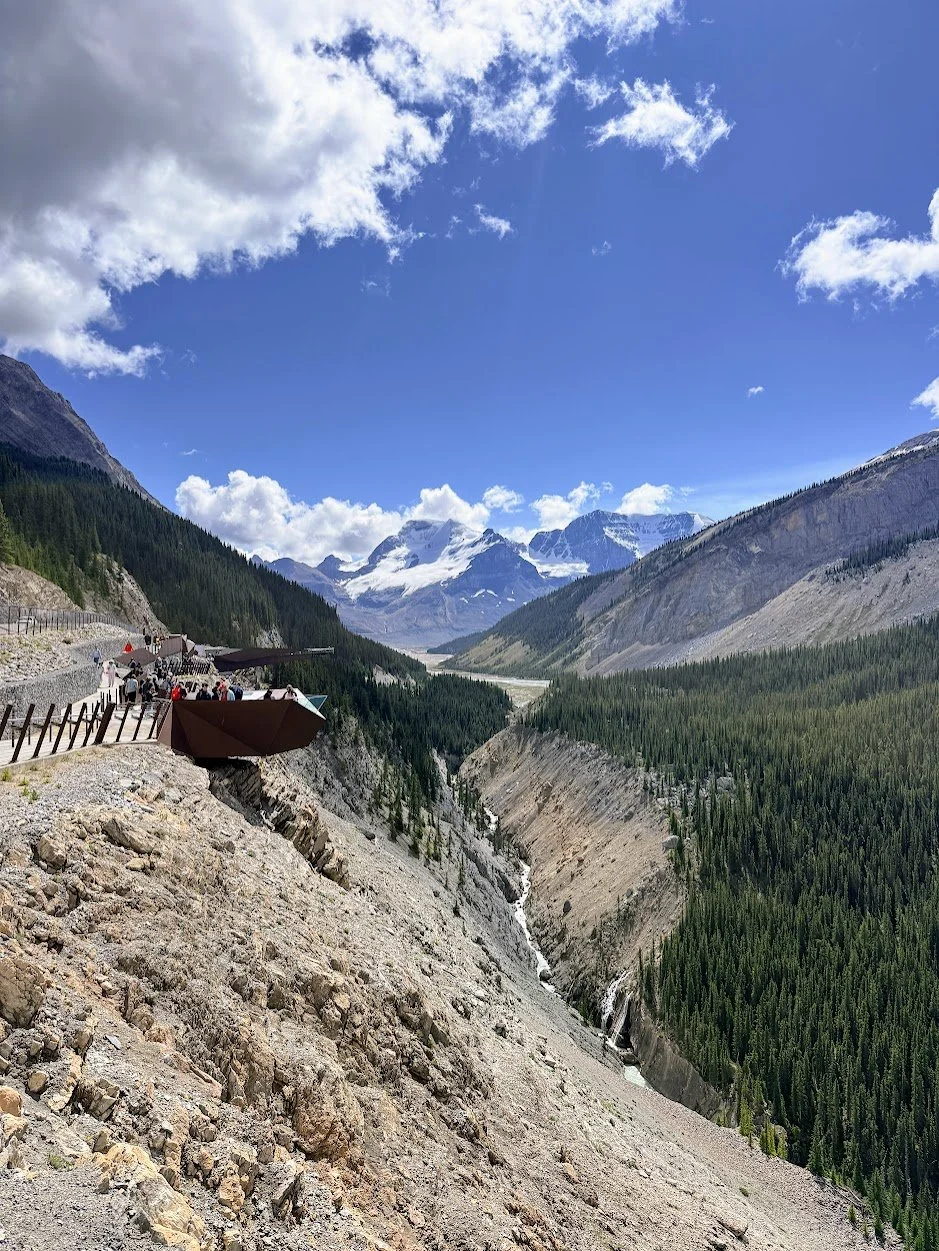
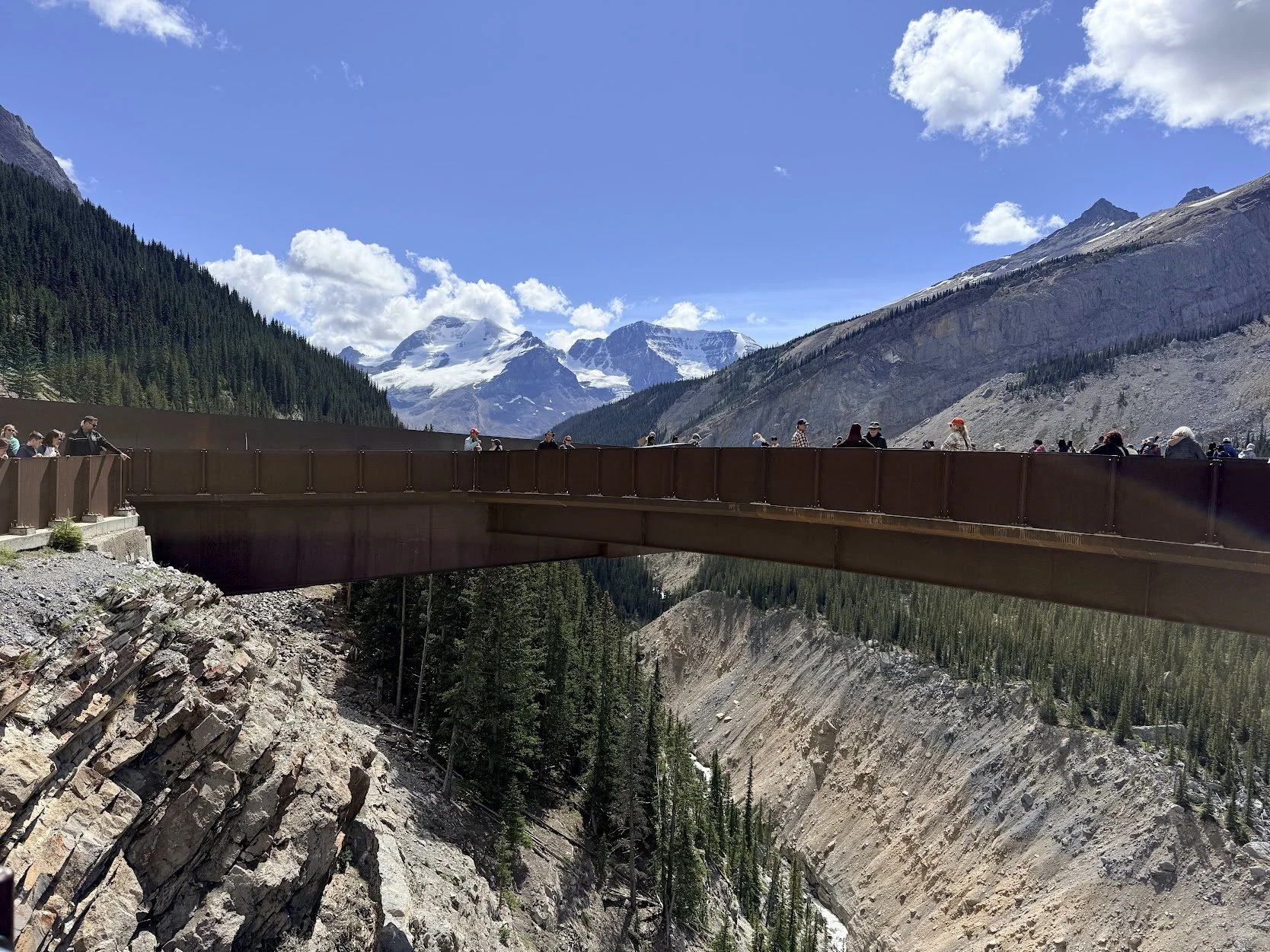
We’d purchased a combination ticket where, once again, the bus moved us from point to point. From the ice, we headed to the Columbia Icefield Skywalk for a completely different perspective. The glass-floored platform extends out over the Sunwapta Valley, with nothing but glass between your feet and the valley floor 918 feet below. You want me to walk on that?
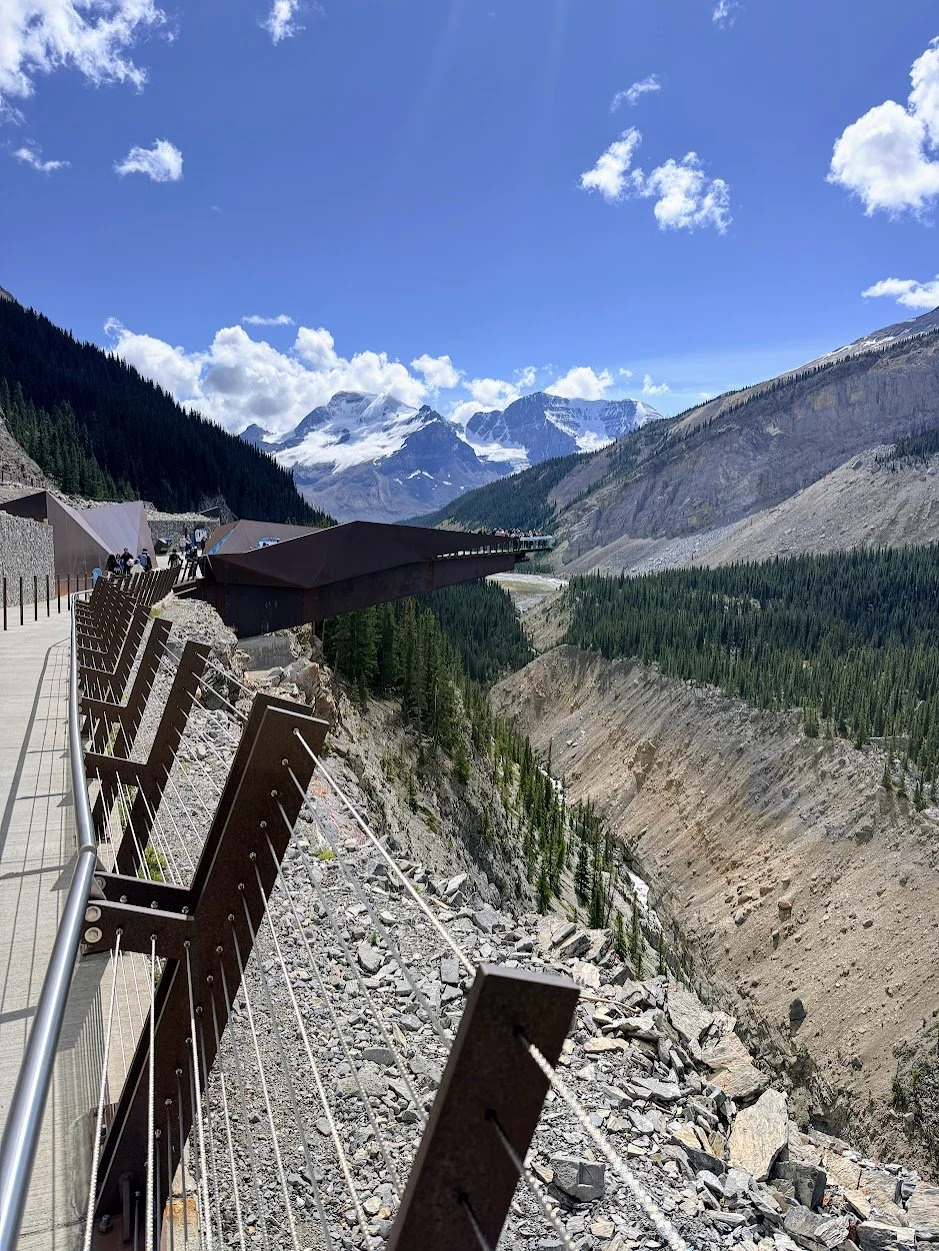
I did it! At 918 feet above the valley floor, I was happy to step onto the glass Skywalk—just not for very long.
Way Up High
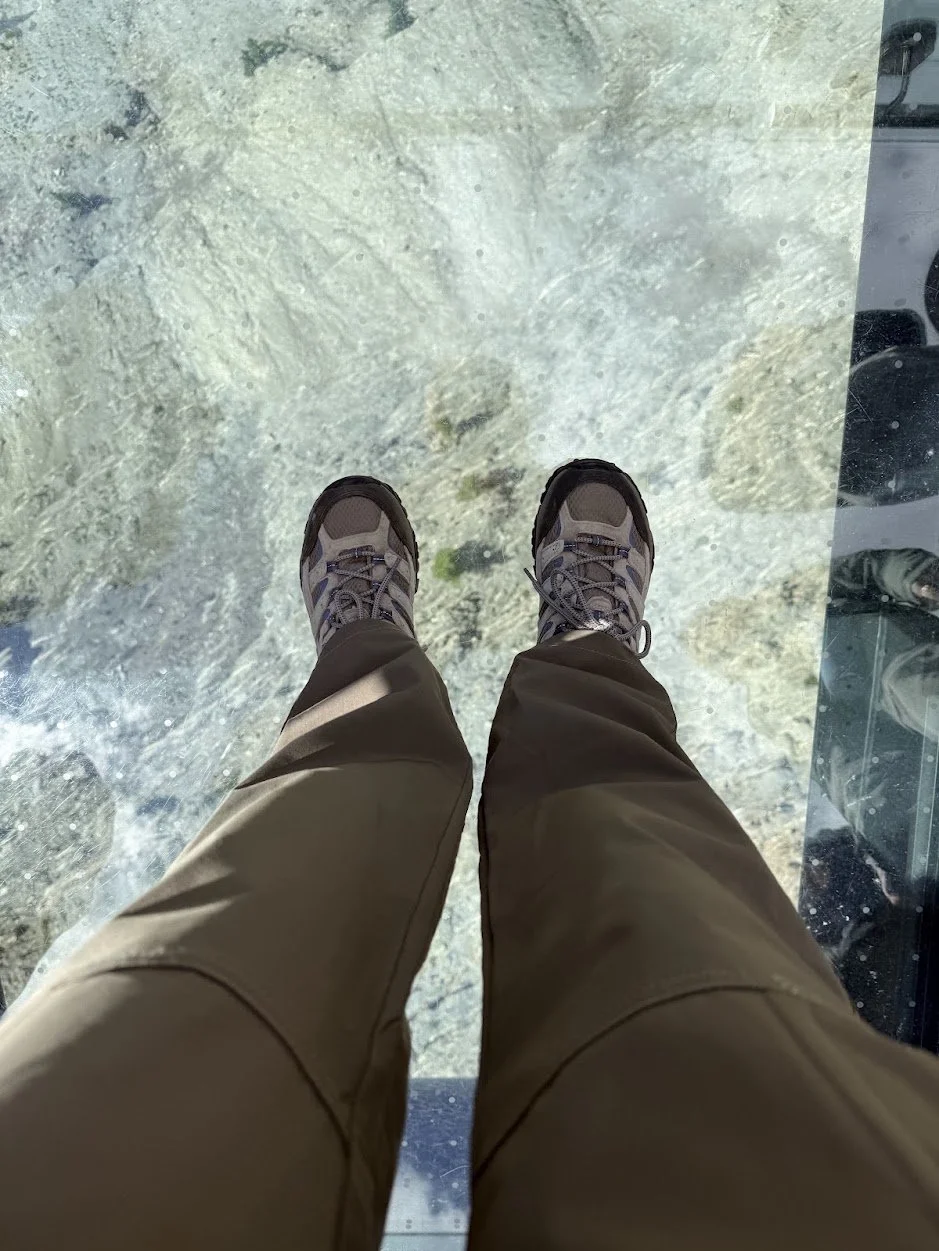
Do not look down! Nothing but glass beneath my feet and the Sunwapta River far below. Reassuringly, each square inch of glass can support more than 1,000 pounds. I still did not linger!
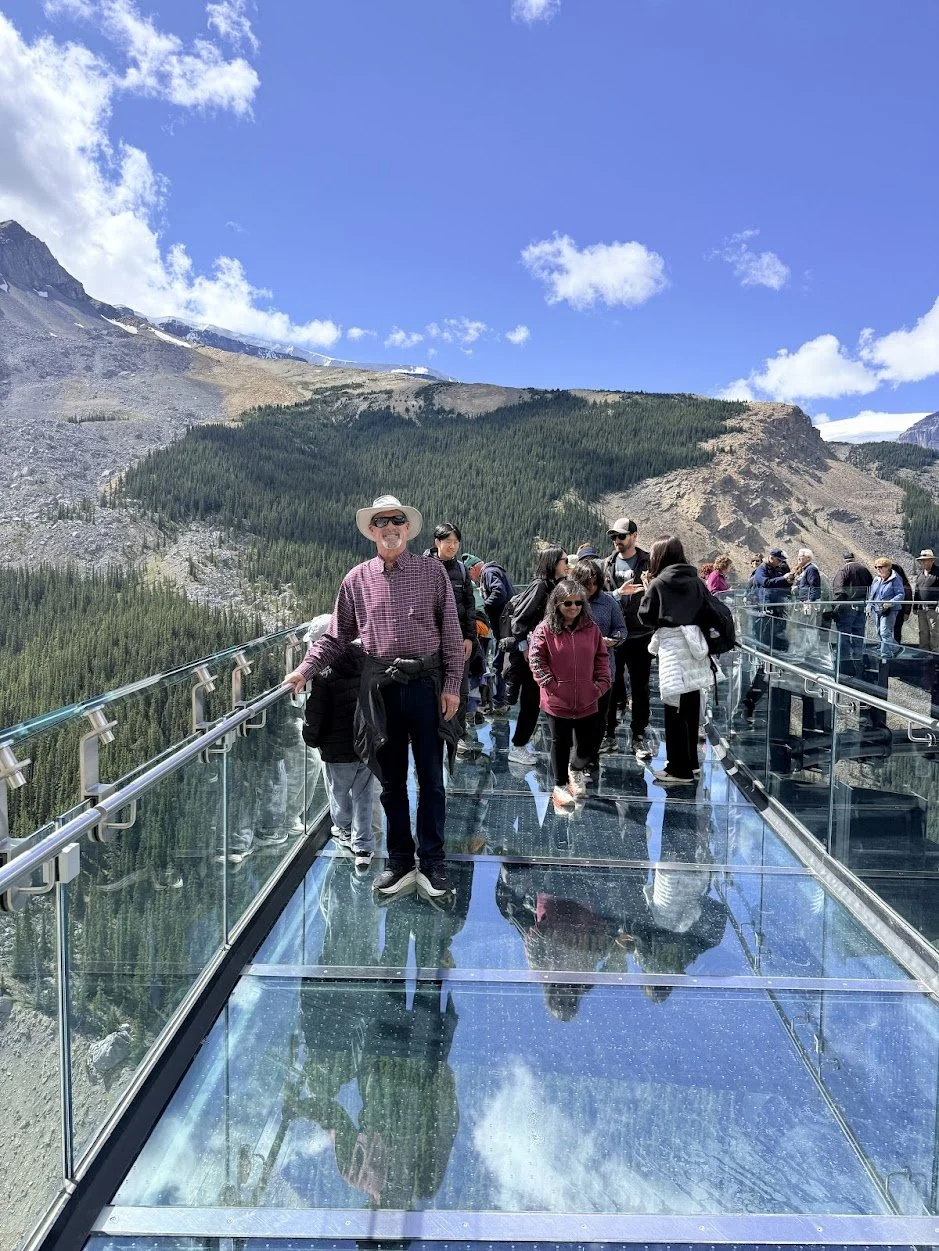
He, he on the other hand, loved it!
A fun short stop that was a part of our Icefield Adventure tour.
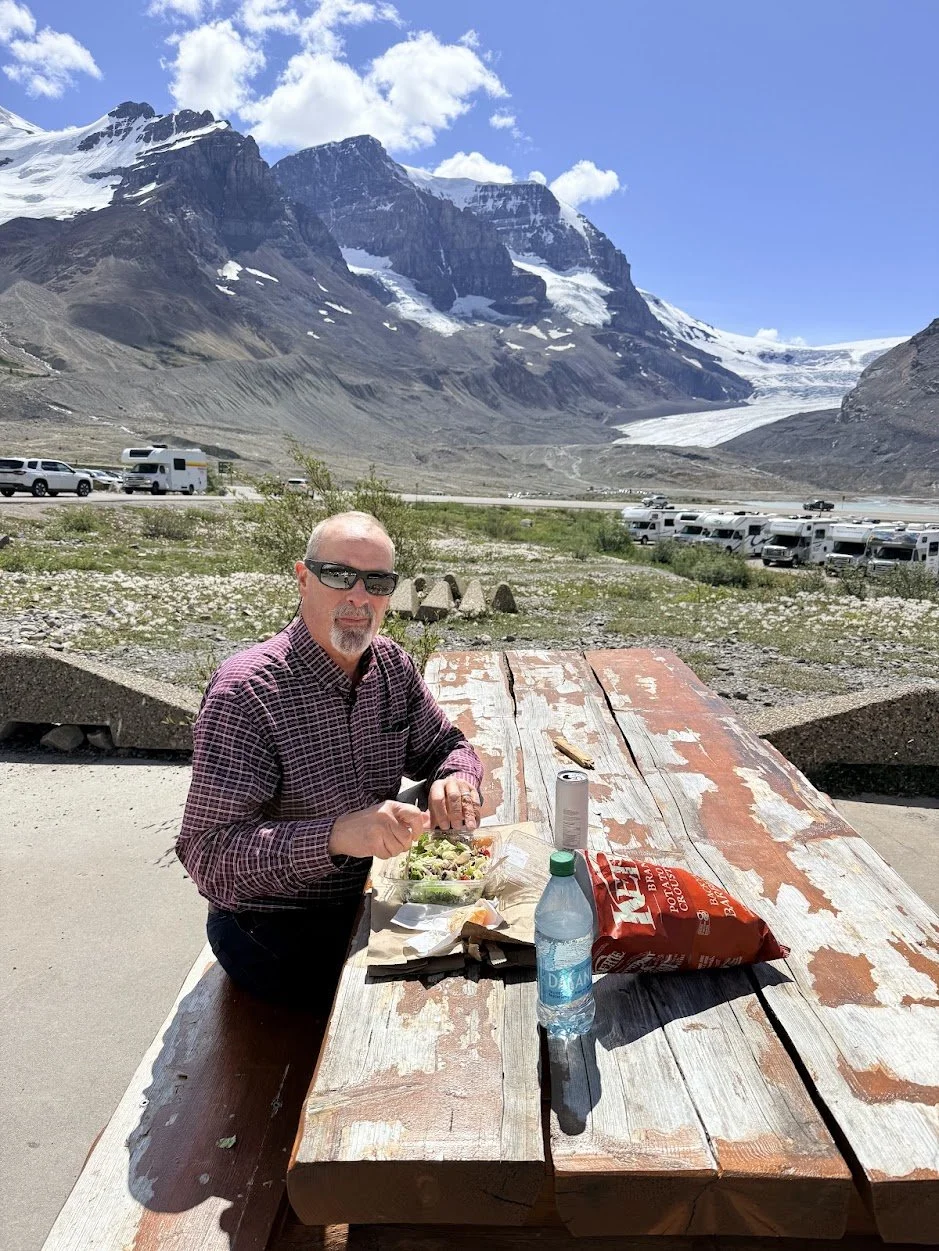
With our feet safely back on the ground, the bus took us back to the visitors center. Tip: If you can, bring a lunch from Banff. There are picnic tables and the food options purchases are limited, and can be very crowded. Shortly after lunch we were back in our rental car headed for a couple of stops on our way back to Banff.
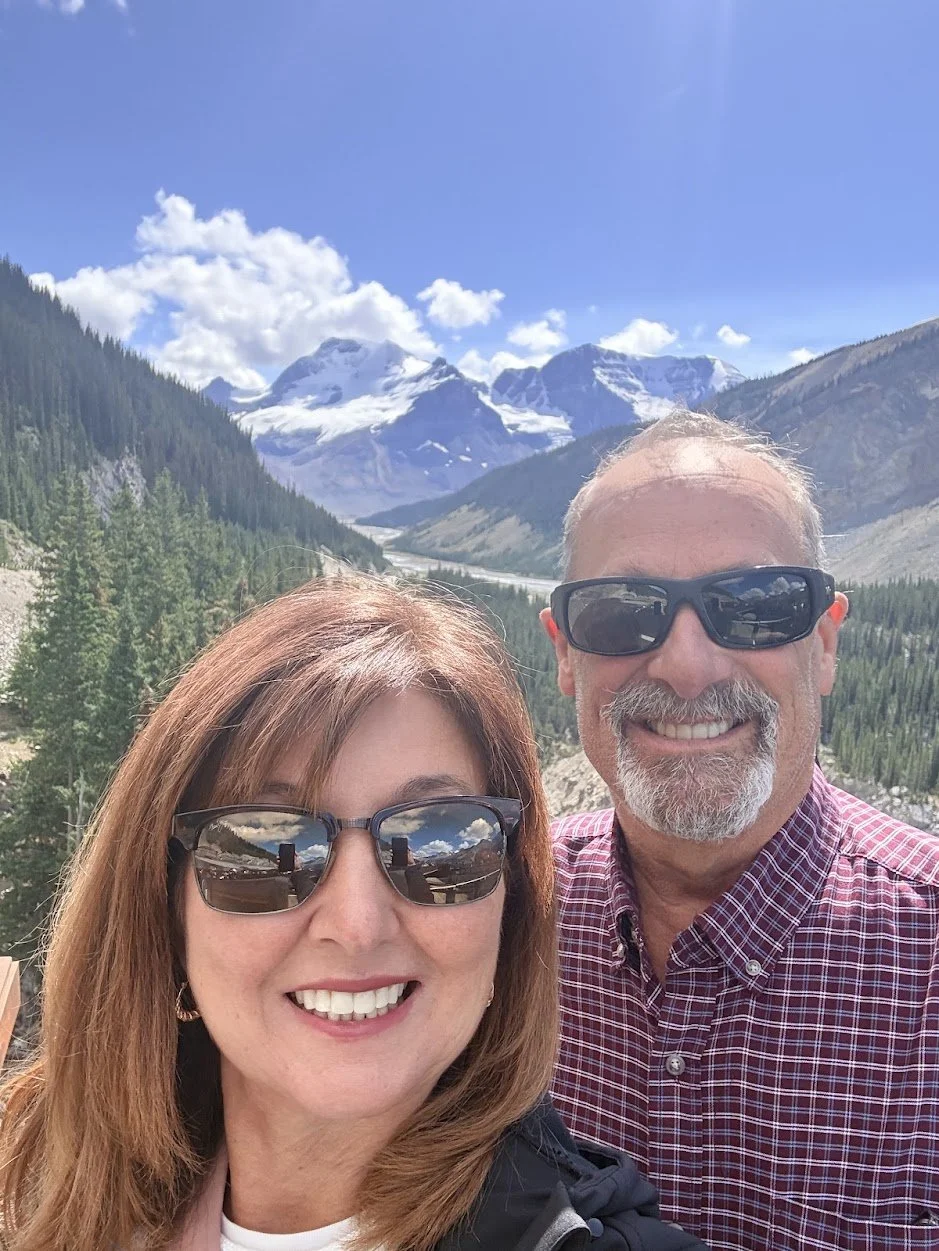
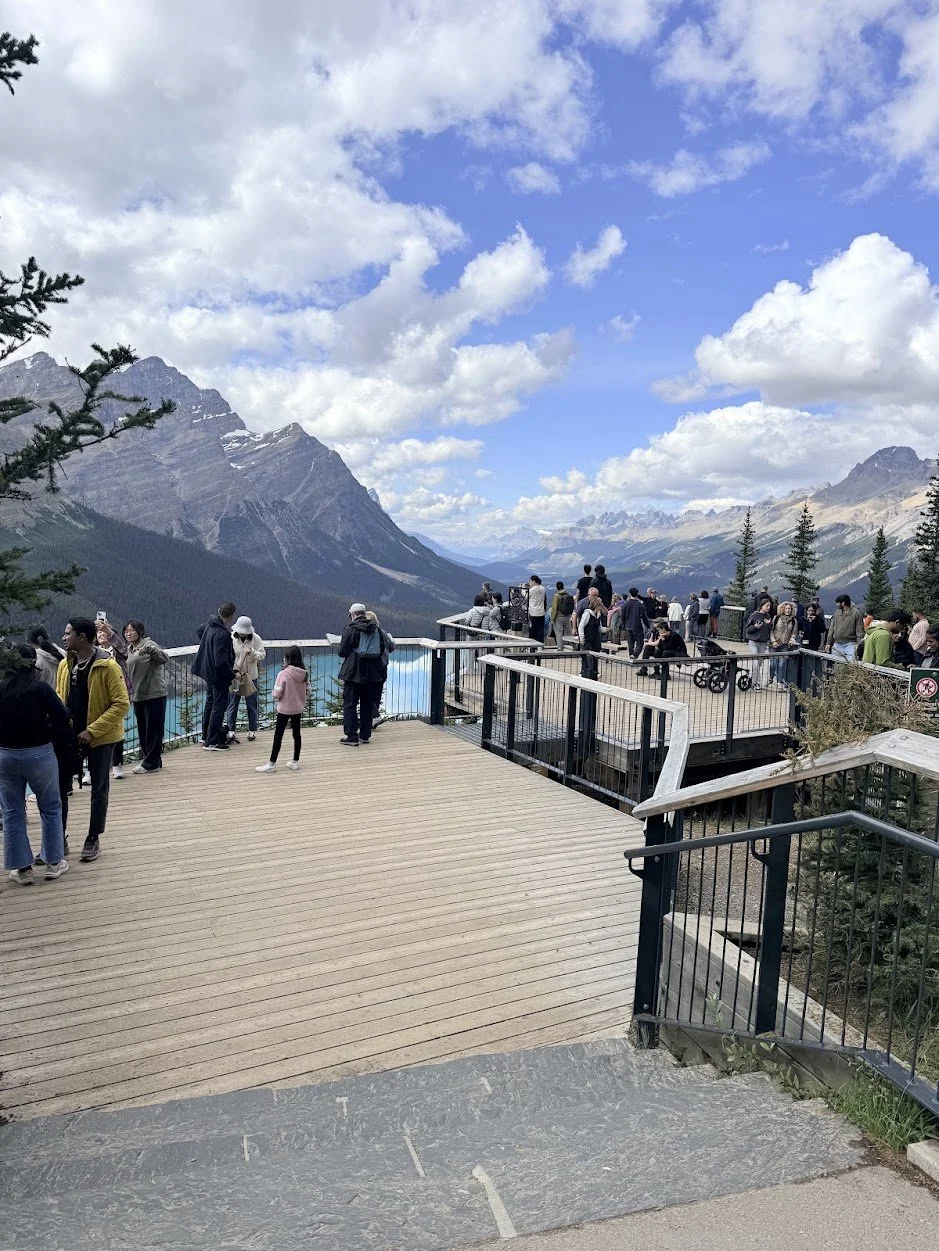
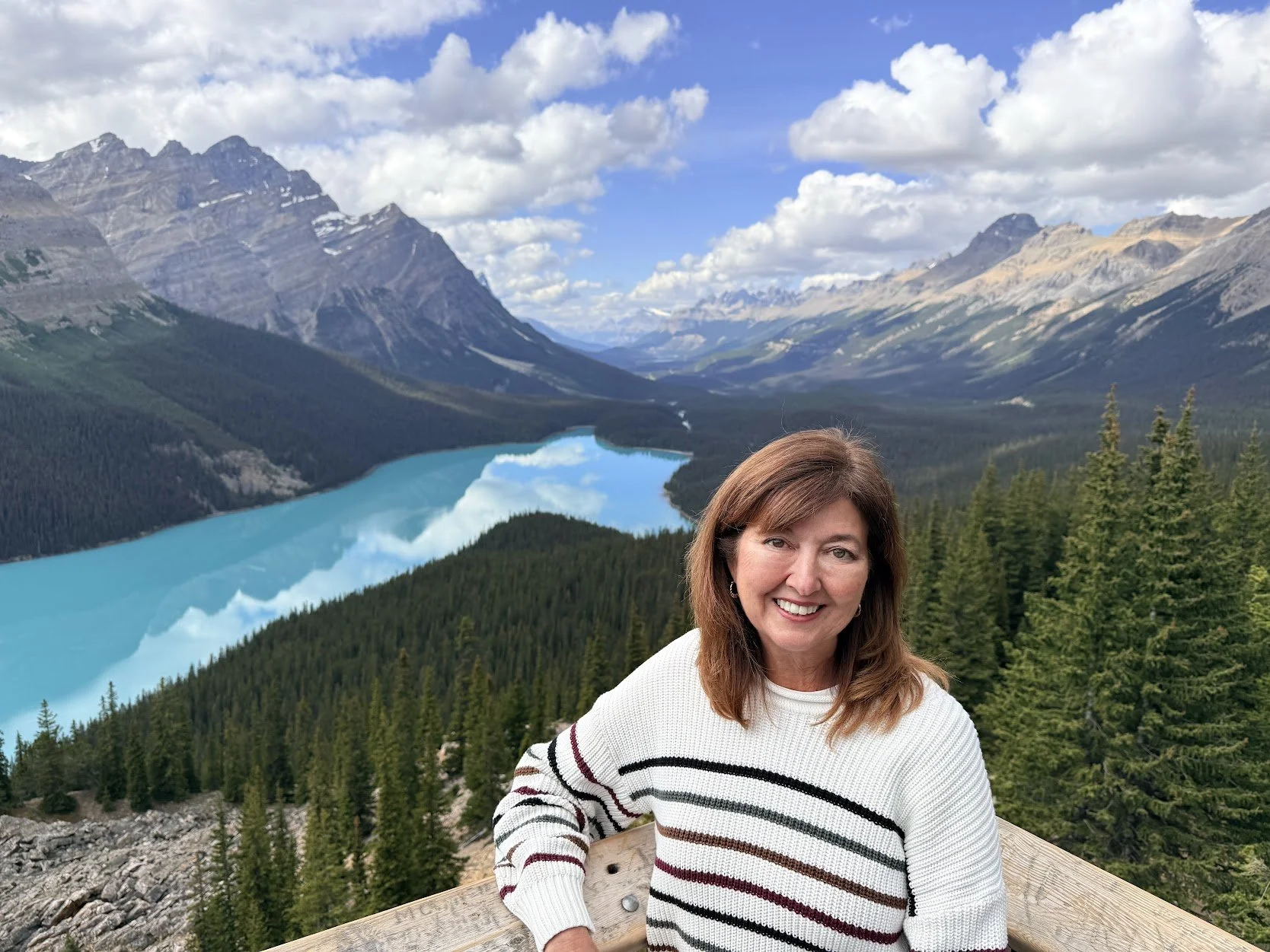
If you make just one stop along the Icefields Parkway, make it Peyto Lake. However, we were not the only ones with Peyto Lake on our list! A short walk from the parking area leads to the viewing platform—and one of the most popular views along the Icefields Parkway. Be prepared to share it, especially during the busy summer months.
And there it is—Peyto Lake, famous for its brilliant blue color and unmistakable shape. From above, the lake is often said to resemble a wolf’s head. Its incredible color comes from fine glacial sediment, or “rock flour,” suspended in the water and reflecting the light.
Peyto Lake is named for Bill Peyto, an early Banff-area guide and outfitter who became one of the best-known characters of the Canadian Rockies.
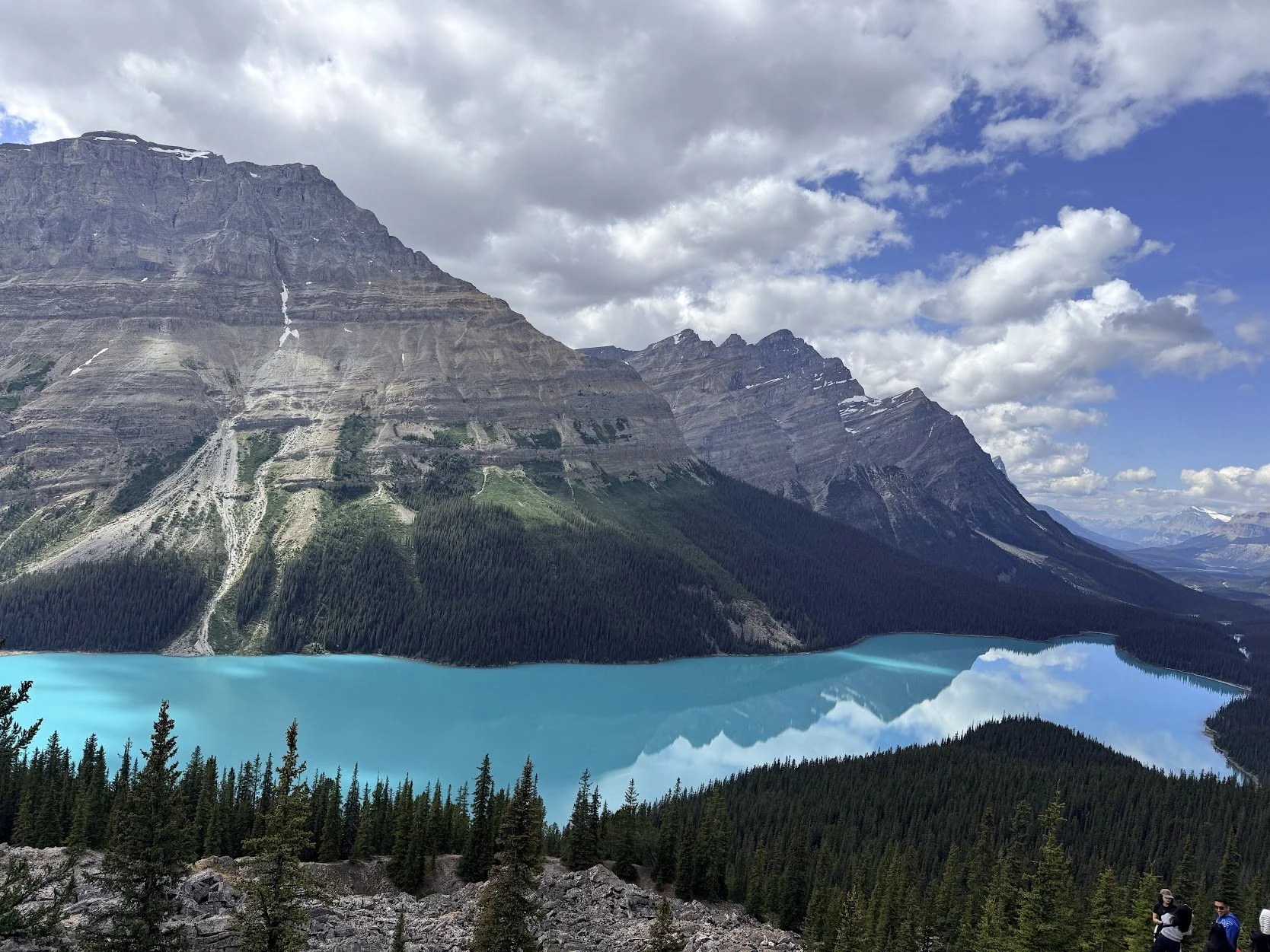
Peyto Lake stretches for nearly 3 km (1.8 miles) through the valley below, surrounded by the peaks of the Canadian Rockies. Definitely one of those views that makes you stop for a while and take it all in.
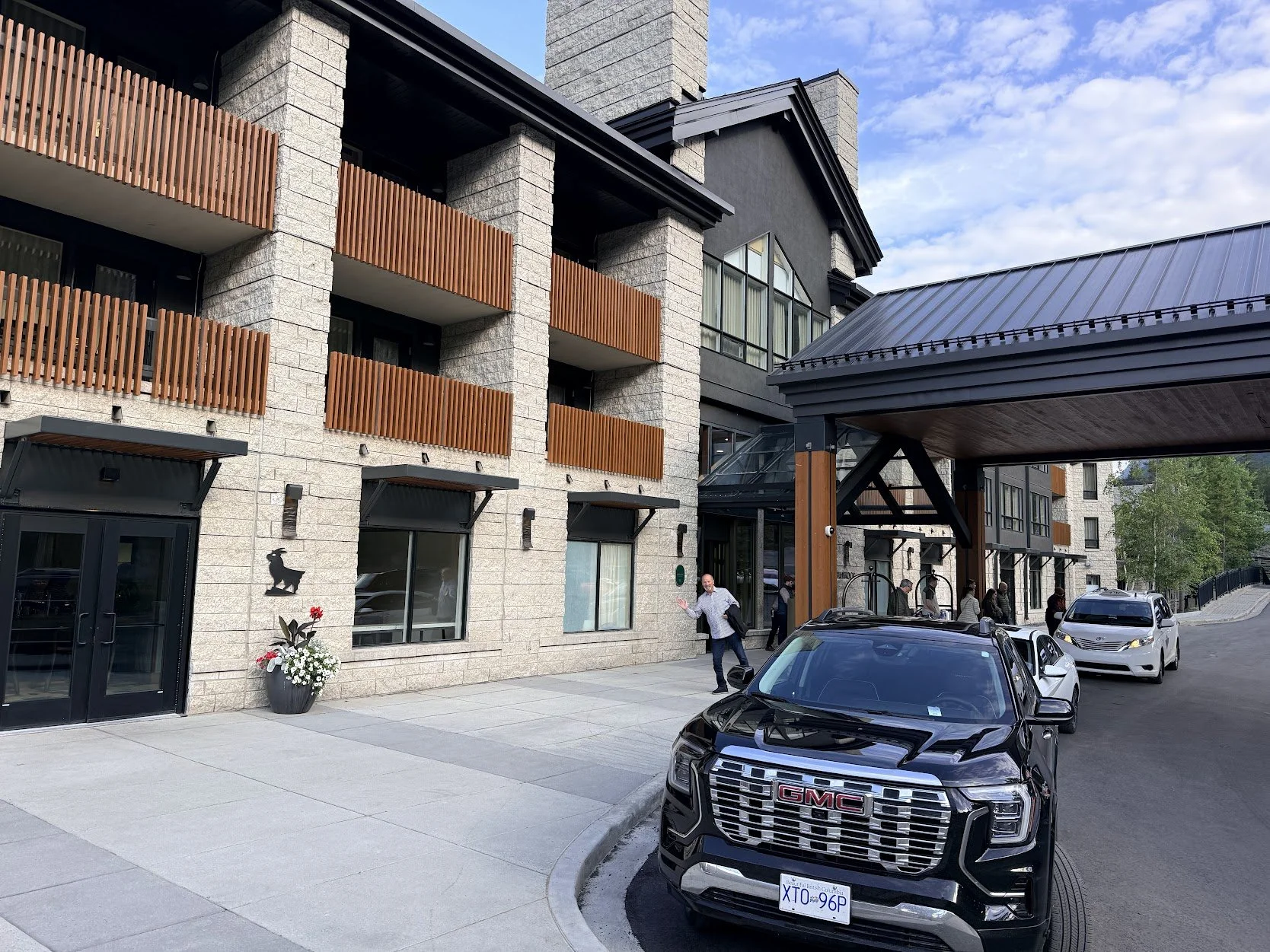
What a day! By the time we returned to the newly renovated Rimrock Resort in Banff, we had covered roughly 230 miles (370 km) and experienced one unforgettable day in the Canadian Rockies. We started out chasing clear skies, not knowing how much of the scenery we would actually see. In the end, the clouds lifted, the mountains appeared, and the Icefields Parkway delivered—from Bow Lake and brilliant Peyto Lake to standing on the Athabasca Glacier. Sometimes it pays to keep driving and see what the day brings.
A Side Note on Banff
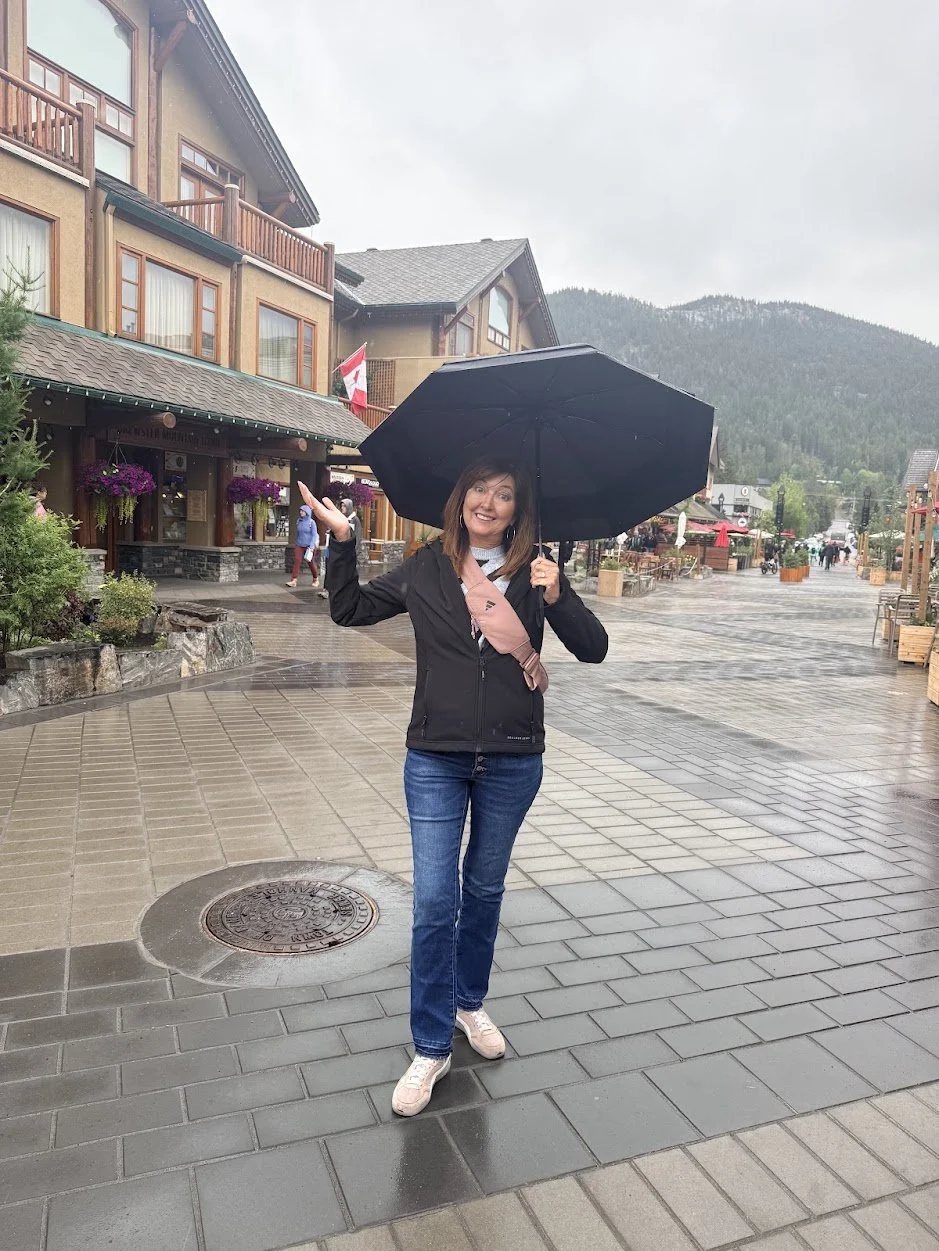
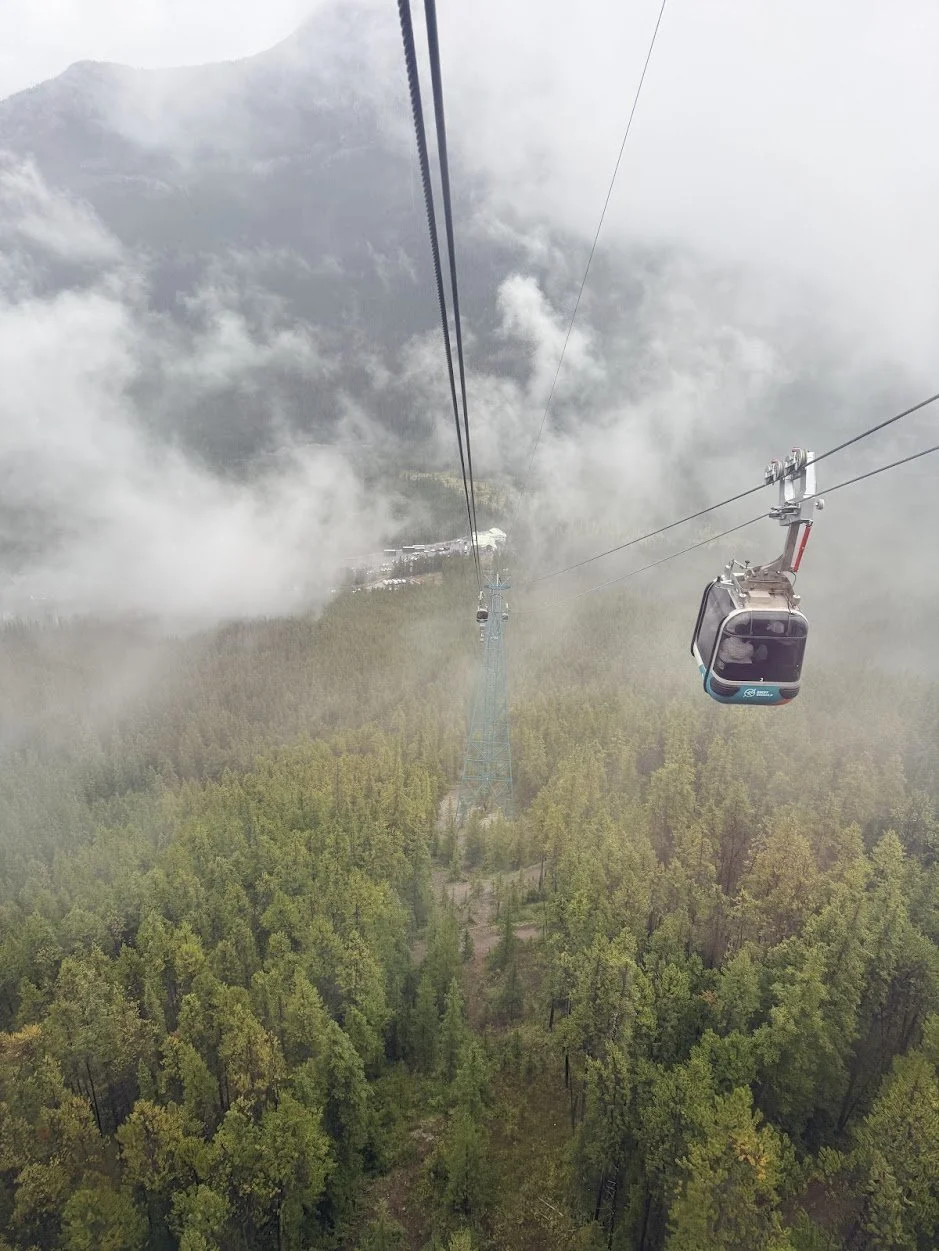
We spent two nights in Banff and had hoped to explore more of this iconic Canadian mountain town, but unfortunately, the weather was not on our side. One reason we chose the Rimrock Resort was its proximity to the Banff Gondola—just steps away. We had booked our gondola ride and dinner at the top six weeks in advance, so rain or shine, we were going up!
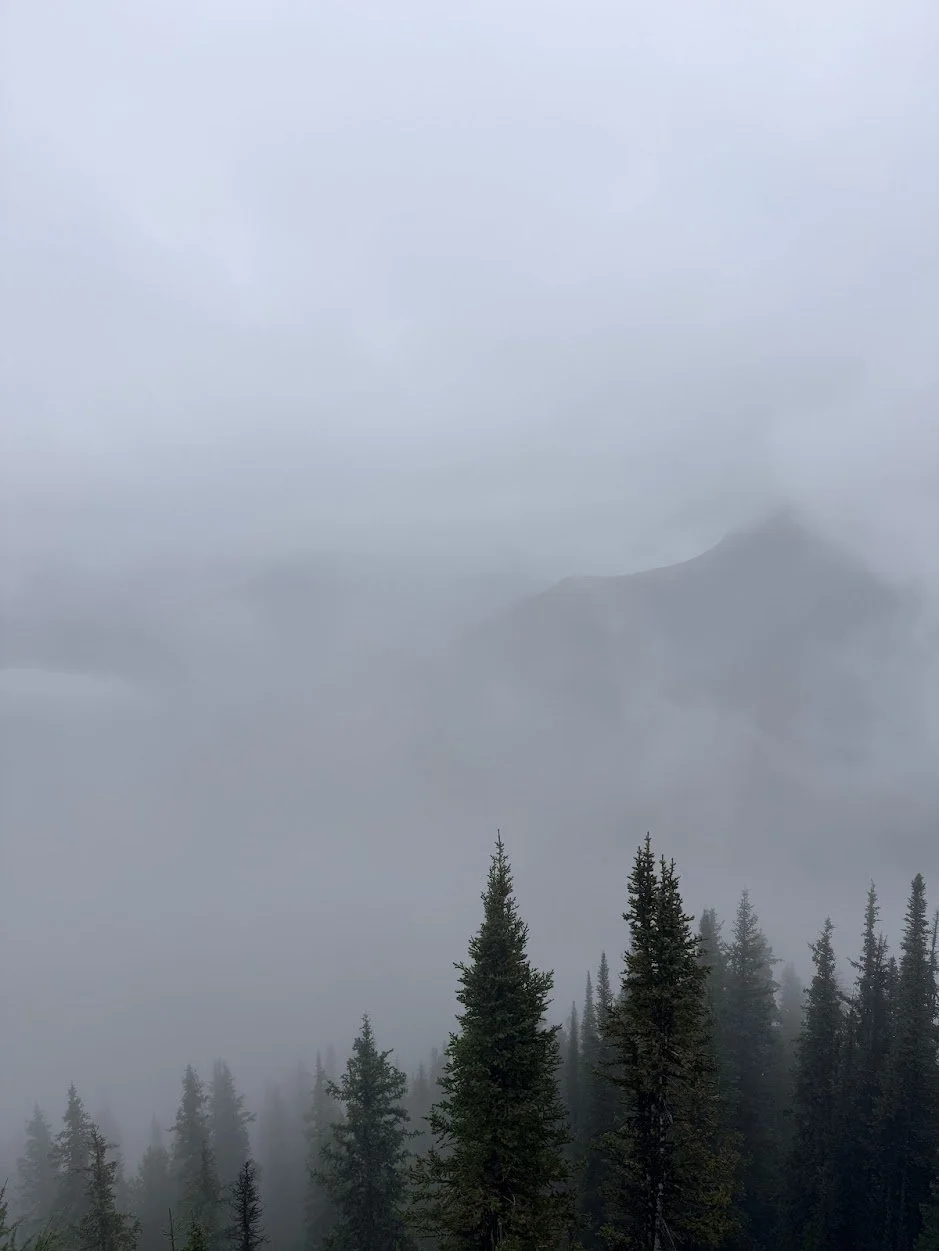
The ride was gloomy but fascinating in its own way as our gondola slowly disappeared into the clouds.

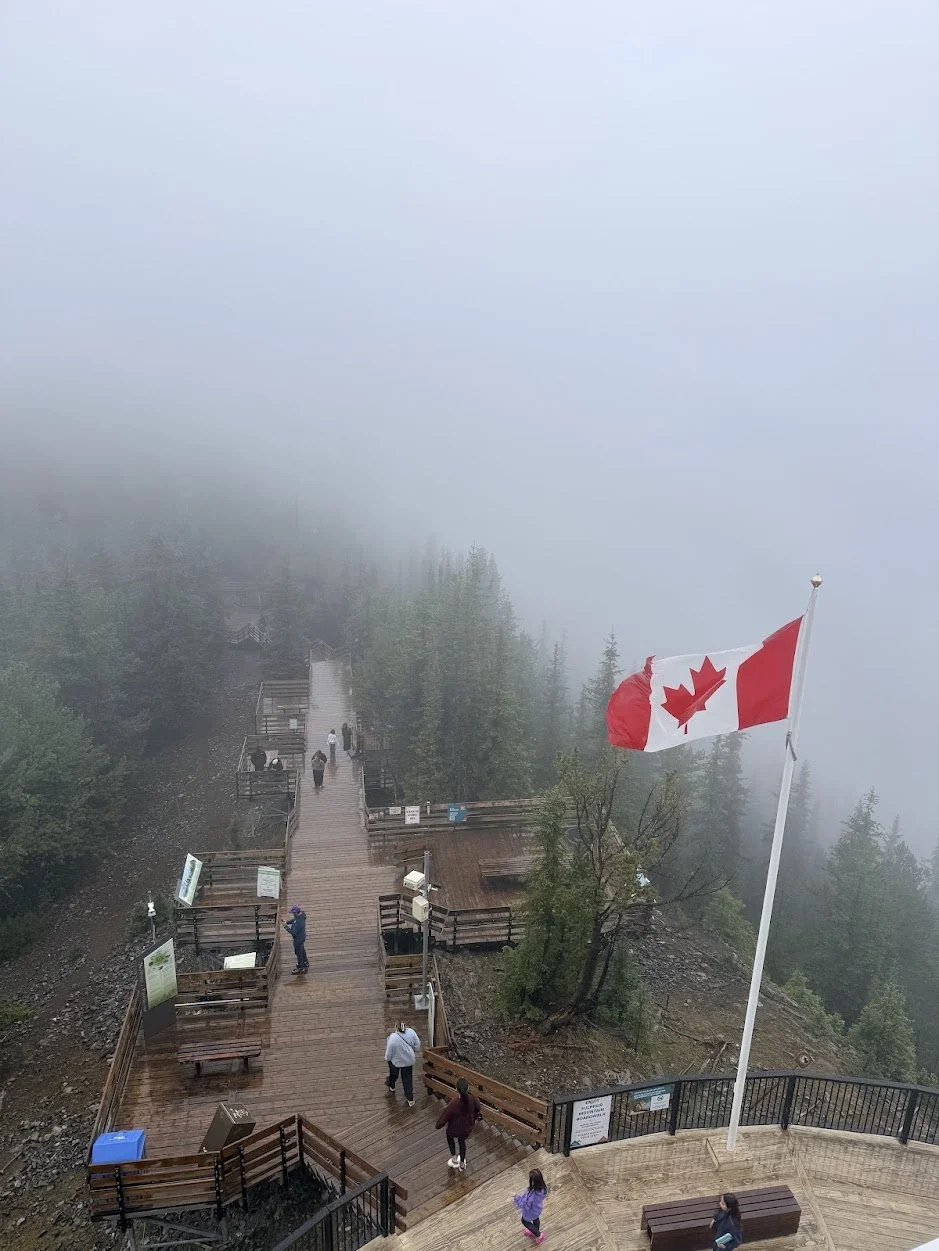
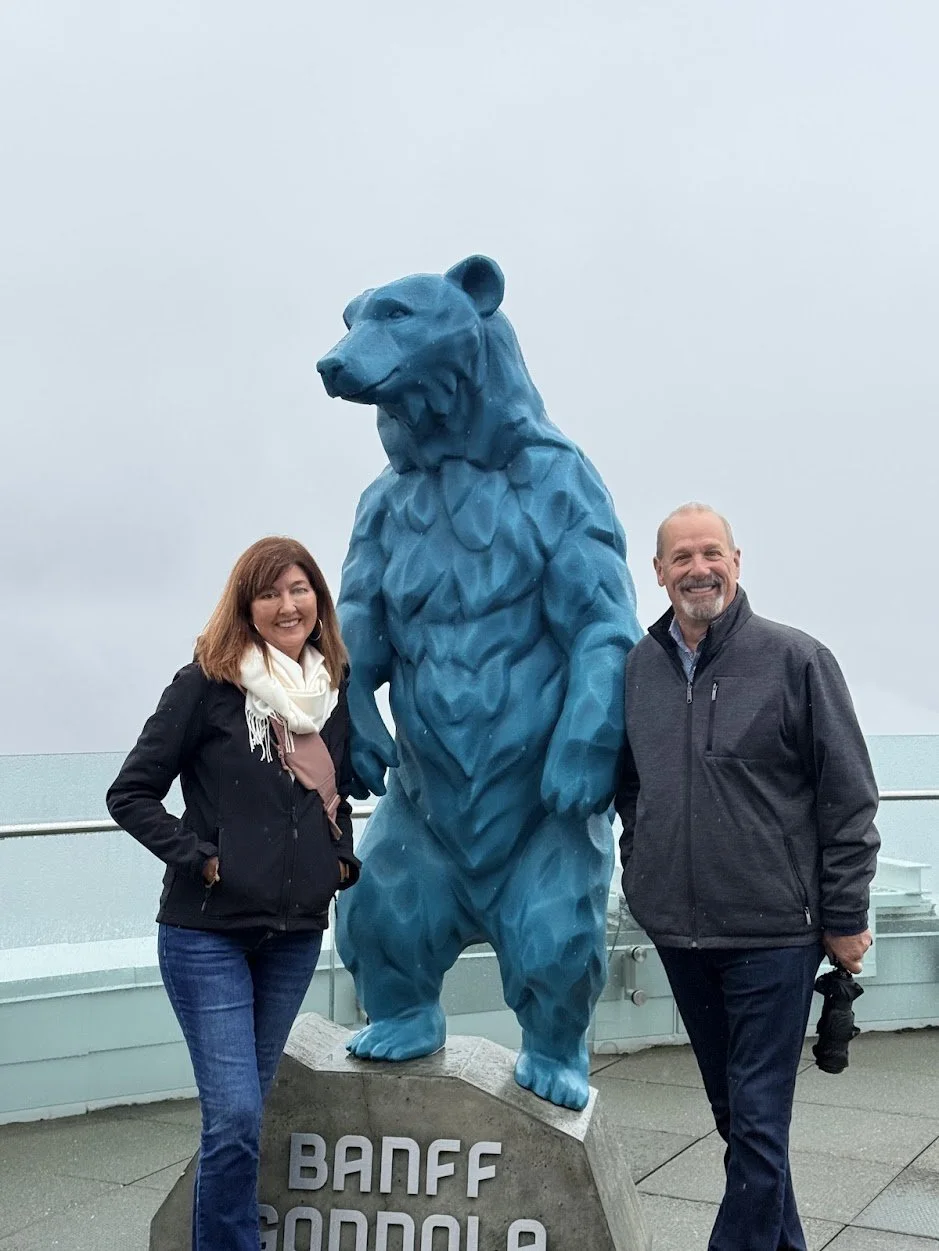
We may have missed those sweeping mountain views, but dinner at Sky Bistro more than made up for it. The food was outstanding and made the evening feel special despite the weather.
Banff may not have shown us its most picturesque side this time, but we were still glad we spent a couple of nights there. With its location, restaurants, and easy access to the Icefields Parkway, Banff makes a great home base for exploring the Columbia Icefield and the Canadian Rockies.



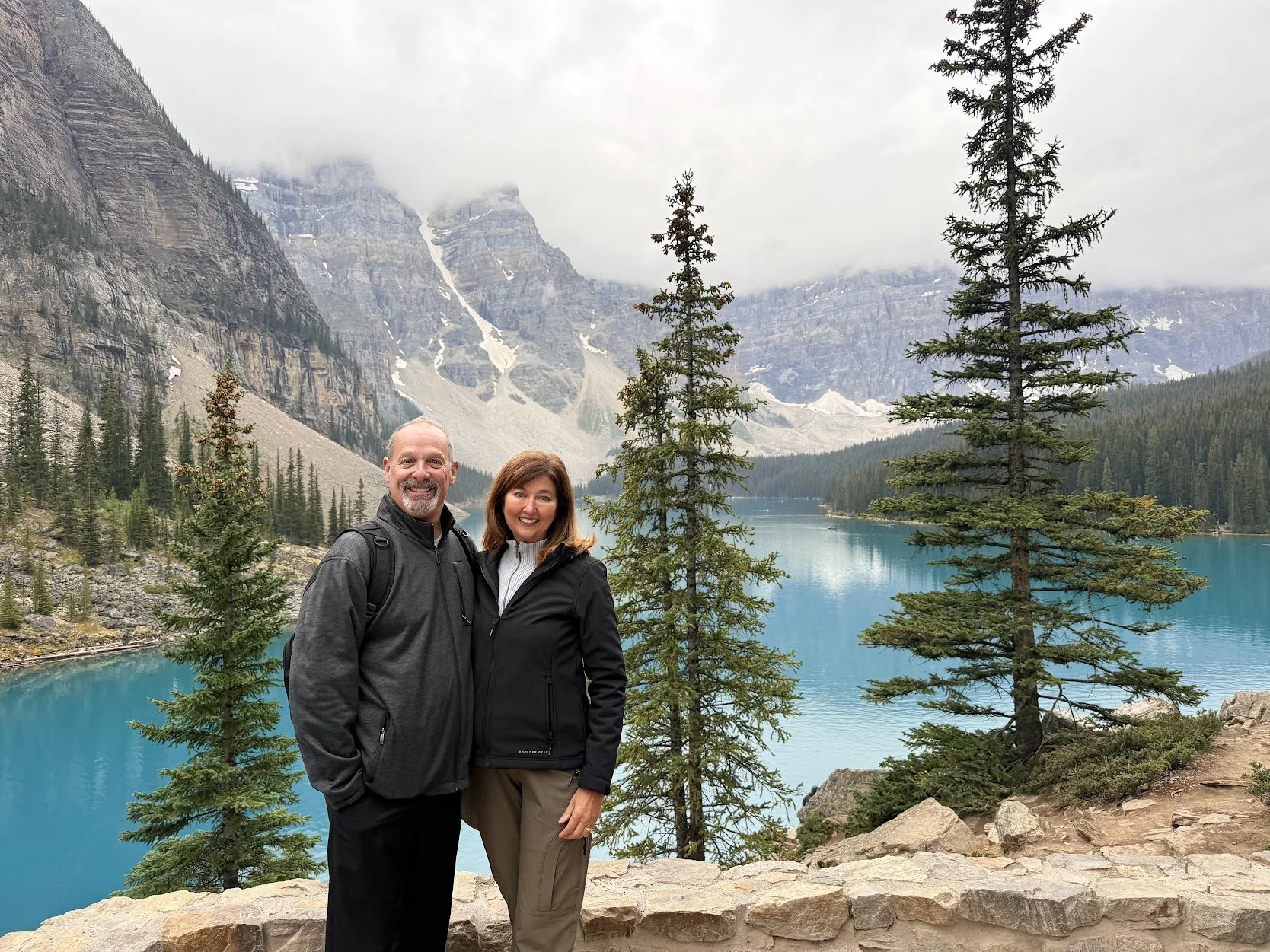

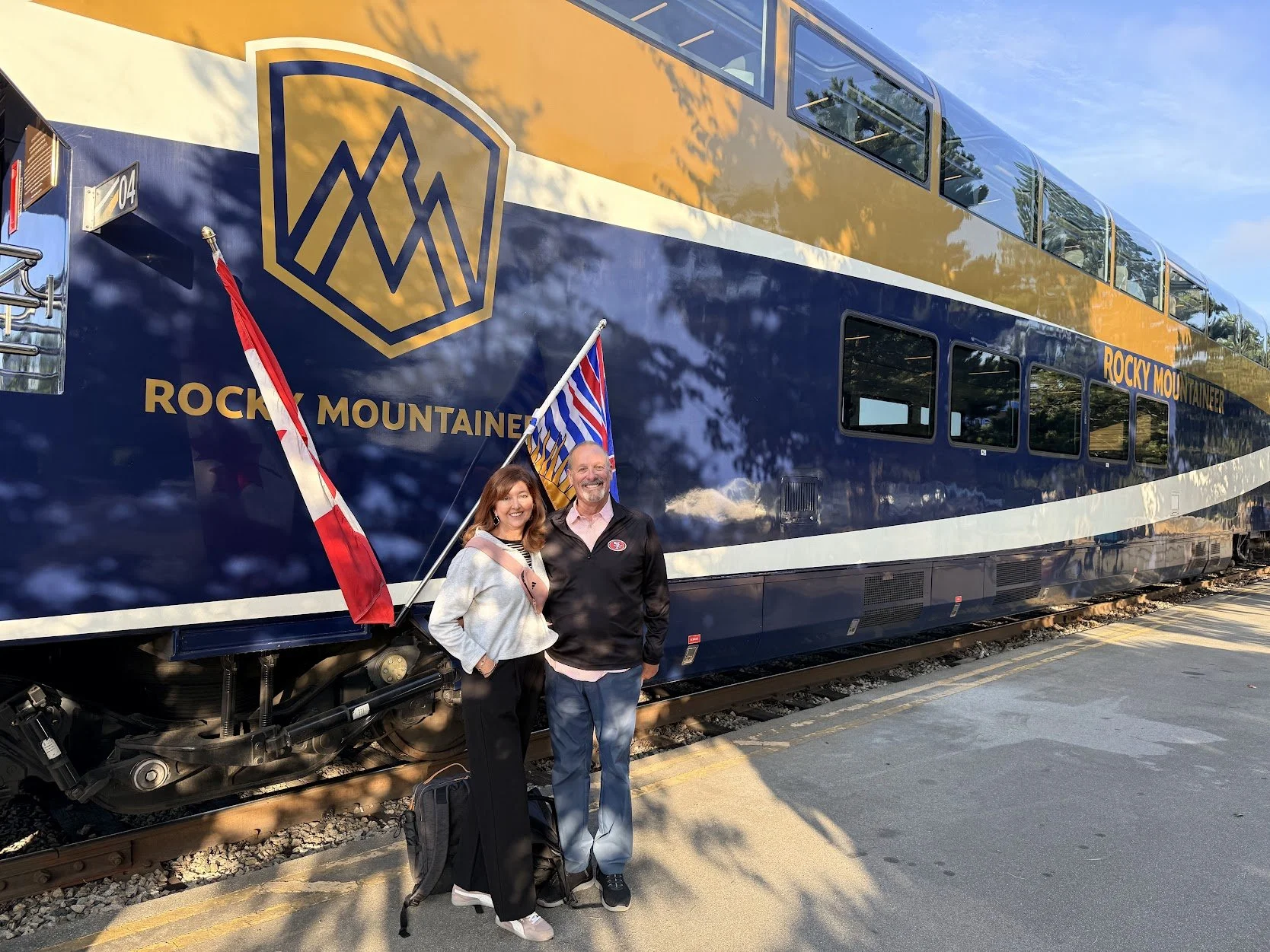



Driving the Icefields Parkway from Banff to the Columbia Icefield—glaciers, turquoise lakes, spectacular views and one unforgettable ride onto the ice.